
In industrial assembly, a reliable joint must withstand mechanical loads, vibration and long-term operating conditions. Structural blind rivets offer a practical solution when high connection strength is required but access to the back of a workpiece is limited. Unlike conventional fastening methods that may require access to both sides, these rivets can be installed from one side, making them suitable for enclosed assemblies, sheet metal structures and industrial equipment. Their interlocking design also helps secure the mandrel after installation, supporting consistent joint integrity in demanding applications.
The main difference lies in the internal locking mechanism. During installation, a rivet tool pulls the mandrel through the rivet body, causing the blind end to expand and clamp the joined materials together. In an interlocking structural blind rivet, the mandrel is mechanically locked in place after setting. This design helps prevent mandrel loss and provides a more secure fastening structure than designs without comparable mechanical retention.
The mandrel also fills the rivet body, contributing to shear-load performance. Combined with the formed blind-side head and clamping action, this structure helps create a permanent connection for applications where joint strength and fastening reliability are important. Structural blind rivets are therefore worth considering when ordinary blind rivets may not meet the application's load or vibration requirements.
Secure Mandrel Retention: The mechanical interlock holds the mandrel in the installed position, reducing the risk of it coming loose during service. This is particularly valuable in equipment exposed to repeated vibration, where the integrity of each fastening point can affect the performance of the overall assembly.
Shear and Tensile Performance: Shear loads act across the fastener, while tensile loads pull the connected components apart along the fastener axis. The mandrel-filled body and interlocking mechanism support the structural performance of the joint. However, actual load capacity depends on rivet dimensions, material properties, hole quality, grip range and the design of the connected parts. Buyers should use verified product data rather than assuming that every structural rivet has the same strength.
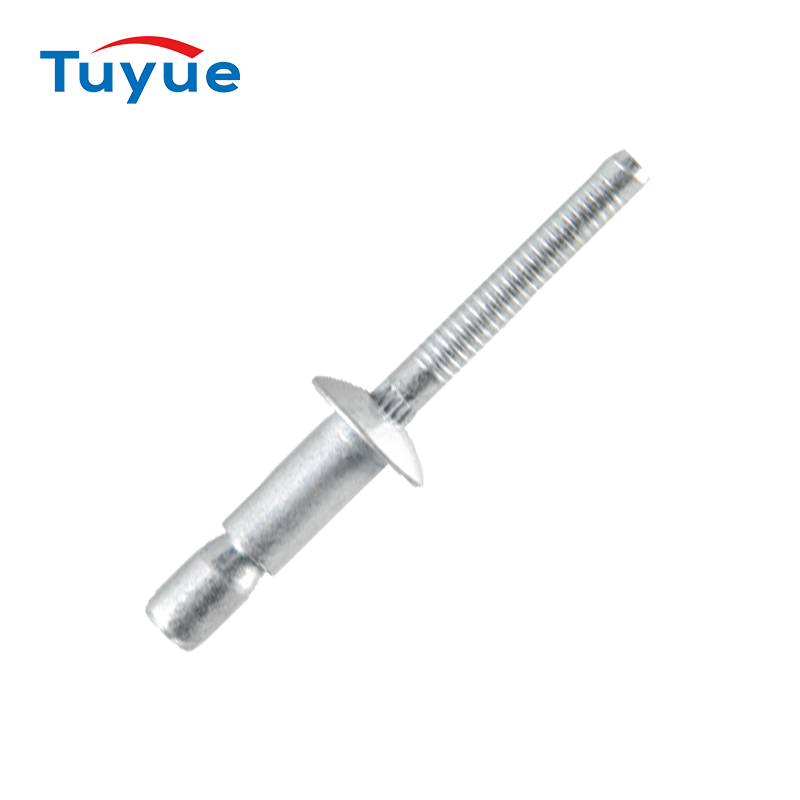
Reliable Clamping: During setting, the rivet body deforms to clamp the workpieces together. Appropriate grip range helps the rivet accommodate the combined thickness of the materials and form a suitable joint. Incorrect sizing, oversized holes or improper installation can reduce clamping effectiveness and compromise connection stability.
Vibration Resistance: Mechanical mandrel retention helps reduce the likelihood of the mandrel becoming dislodged. Nevertheless, vibration resistance does not mean that a joint is immune to fatigue, substrate deformation or failure under excessive loading. For critical applications, joint design and installation quality remain essential.
Structural blind rivets can be considered for automotive assemblies, industrial machinery, construction panels, metal enclosures and other structural applications that require permanent fastening. Their one-sided installation is particularly useful when the reverse side of a component is inaccessible or enclosed. Depending on the design and validated performance data, they may also be suitable for assemblies exposed to mechanical vibration or demanding service conditions.
Material selection is equally important. Steel rivets may be appropriate where mechanical strength is a priority, while stainless steel options can be considered for environments requiring improved corrosion resistance. Compatibility between the rivet, joined materials and surrounding environment should be assessed to reduce corrosion risks and support long-term performance.
Selecting a structural blind rivet involves more than matching its diameter to a pre-drilled hole. First, determine the total material thickness and select a rivet with a suitable grip range. Next, evaluate the expected shear and tensile loads, vibration conditions and the strength of the materials being joined. Hole diameter, edge distance and the condition of the workpiece should also be checked against the relevant product requirements.
Installation equipment is another important consideration. The rivet tool must be compatible with the rivet size and mandrel design, and the setting process should produce a properly formed joint. For applications exposed to moisture or corrosive environments, confirm the body material, mandrel material and surface finish rather than relying on the coating name alone.
Tuyue's Interlocking Structural Blind Rivet range lists steel or stainless steel for both the rivet body and mandrel, a dome head, diameters from 3.2 mm to 6.4 mm, lengths from 8 mm to 35 mm, and galvanized or colored finishes. These specifications provide a starting point for evaluating product suitability. The appropriate model should be selected according to the actual material thickness, loading conditions and installation requirements.
Even a well-designed fastener cannot compensate for an unsuitable joint design. Inadequate edge distance may lead to material tear-out, while an incorrect grip range can prevent proper clamping. Poorly prepared holes or incompatible installation tools may also affect setting consistency. For load-bearing assemblies, buyers and engineers should review available shear and tensile test data, installation guidance and any applicable qualification requirements before finalizing a specification.
As a supplier of blind rivets and other industrial fasteners, Zhejiang Jiaxing Tuyue Import and Export Co., Ltd. provides fastening options for different assembly needs. Its interlocking structural blind rivets are designed around secure mandrel retention, structural connection performance and one-sided installation. Matching these features with the right application requirements helps manufacturers make more informed fastening decisions.