Securing Every Connection
Trust Built on 20 Years of Expertise
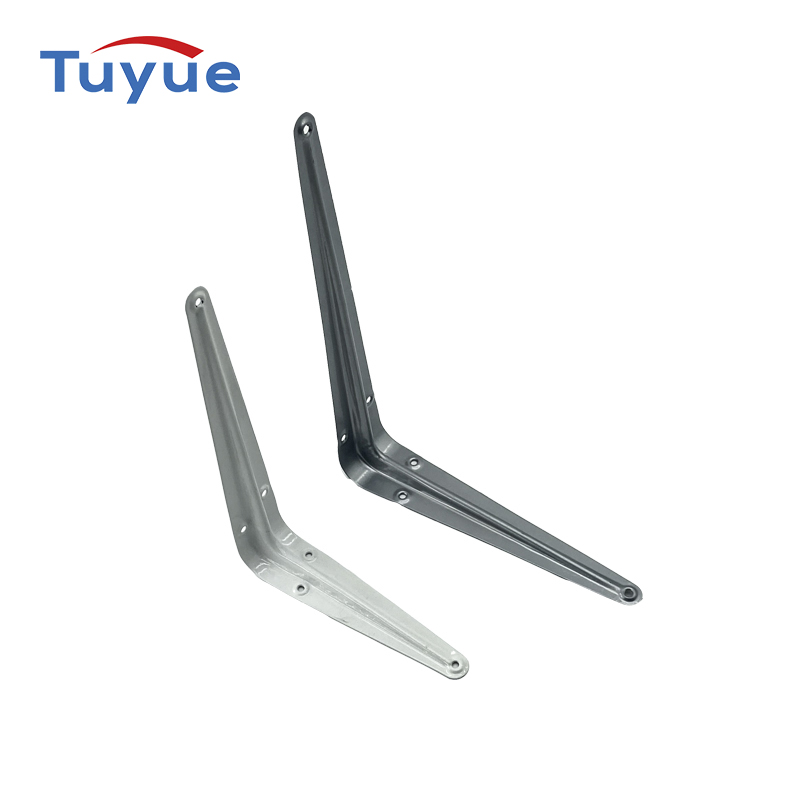
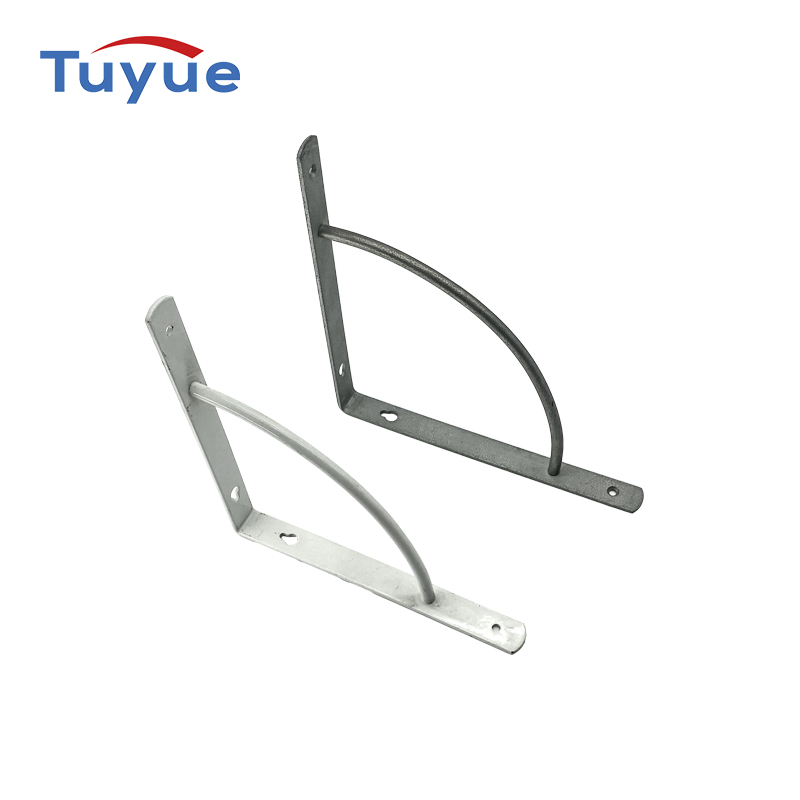
When it comes to structural fabrication and industrial assembly, stamping part iron framing steel corners play a foundational role that is often underestimated. These components are produced via precision metal stamping — a high-speed, die-based manufacturing process that forms flat sheet metal (typically carbon steel, alloy steel, or stainless steel) into accurate corner brackets, angle supports, and framing aids. The result is a part with tight dimensional tolerances, consistent geometry, and high repeatability — characteristics that are difficult to achieve with manual bending or casting at comparable cost.
As a one-stop Hardware And Fasteners supplier with over 20 years of industry experience, Zhejiang Jiaxing Tuyue Import and Export Co., Ltd. (located at RM1402–1404 Mingzhu Square, Jiaxing, Zhejiang, China) supplies stamped framing corners alongside a full range of structural hardware for global customers across construction, manufacturing, and industrial sectors.
A stamping part iron framing steel corner is a metal bracket formed through progressive or single-stage die stamping. Raw coil or sheet stock is fed into a stamping press, where punch-and-die sets cut, bend, and shape the material in one or multiple operations. The finished part typically forms a 90° or custom-angle corner profile used to reinforce, align, or connect structural members.
Q235 / Q345 carbon steel — good weldability and cost efficiency for general framing.
SUS304 / SUS316 stainless steel — for corrosion-prone or food-grade environments.
Galvanized steel — adds zinc coating post-stamping to improve outdoor durability.
Alloy steel (e.g., 45# steel) — for high-load or hardened bracket applications.
The key technical parameters buyers should specify include: material grade, sheet thickness (typically 1.0–6.0 mm), flange width, hole pattern (punched or unpunched), surface treatment (zinc plating, powder coating, hot-dip galvanizing), and tensile/yield strength requirements per the relevant EN, ASTM, or GB standard.
Blanking — the flat outline is cut from sheet or coil stock.
Bending/Forming — the blank is shaped into the corner angle using a progressive die or brake press setup.
Piercing — mounting holes are punched simultaneously, eliminating secondary operations.
Trimming & Deburring — edges are cleaned to remove burrs that could cause assembly issues or injury.
Surface Treatment — zinc plating (electro or hot-dip), chrome-free passivation, or powder coat is applied depending on the service environment.
Die clearance, punch radius, springback compensation, and material grain direction all directly affect the dimensional accuracy of the finished corner. Springback — the elastic recovery of the metal after bending — is particularly important with higher-strength steels and must be compensated in the die design. Tight angular tolerance (typically ±0.5°) is essential in framing applications where multiple corners must stack or align.
For high-volume production, progressive dies (which perform multiple operations in a single press stroke) significantly reduce per-part cost and improve consistency. Custom tooling amortized over large order quantities is standard practice in the Chinese fastener and stamping supply chain.
Stamped framing steel corners serve as critical nodes in structural assemblies. In steel-framed commercial and industrial buildings, corner brackets transfer load between vertical and horizontal members, prevent racking deformation, and maintain angular alignment during welding or bolted assembly. In equipment housings, machinery bases, and metal shelving, they provide rigidity without adding significant weight.
These parts work in direct conjunction with threaded fasteners. Self-drilling Roofing Screws and Drilling Screws are commonly used to fix stamped corners into thin-gauge steel framing — eliminating the need for pre-drilled pilot holes and reducing installation time significantly. Where disassembly or higher shear loads are required, Stainless Steel Bolt Nut Screws Washers provide the preferred connection. In applications where only one side is accessible, Aluminium Steel and SS Blind Rivets offer a clean, one-sided fastening solution compatible with most stamped corner geometries.
This integration between stamped structural parts and the wider Hardware And Fasteners product family is why sourcing from a supplier who covers both categories — as Tuyue does — simplifies procurement, ensures dimensional compatibility, and reduces supply chain risk.
Surface treatment choice directly determines service life. For indoor, dry environments, electro-zinc plating (5–12 µm) per ISO 2081 is sufficient and cost-effective. For outdoor or humid environments, hot-dip galvanizing per ISO 1461 (minimum 45 µm) is strongly recommended — it provides sacrificial cathodic protection and dramatically extends the corrosion-free service life. Powder coating adds an additional decorative and protective layer, often specified for architectural or visible applications.
When ordering stamped corners for solar mounting structures or rooftop framing, compatibility with Solar and Photovoltaic Module hardware should be considered — especially regarding galvanic corrosion between dissimilar metals (e.g., aluminum rail and steel corner). In such cases, stainless steel or aluminum-compatible coatings are preferable.
Reputable stamping part suppliers maintain quality management systems in line with ISO 9001. Dimensional inspection using CMM (Coordinate Measuring Machine) or optical comparators ensures that critical tolerances are met batch to batch. Material certifications (mill test reports) confirming chemical composition and mechanical properties should accompany each shipment.
Zhejiang Jiaxing Tuyue holds relevant industry certifications — details are available on the company's Certifications page — and operates with a transparent factory and quality control process reviewable via the Factory section of the company profile.
Load requirements: static vs. dynamic; shear vs. tensile loading direction.
Dimensional fit: flange width, leg length, thickness, and hole pattern must match mating profiles.
Material: carbon steel for cost; stainless steel for corrosion resistance; galvanized for outdoor use.
Surface treatment: match to service environment and any regulatory requirements (RoHS, REACH for zinc/chrome treatments).
Quantity & lead time: progressive die stamping favors large MOQs; smaller custom runs may use brake press forming.
Fastener compatibility: confirm hole diameter and pitch align with the screws, bolts, or rivets in your assembly.
For application-specific inquiries, custom dimensions, or OEM sourcing needs, Tuyue's team can be reached at office@zjraise.cn or export@zjraise.cn, or via the Contact page. Common sourcing questions are also addressed in the FAQ section.