When it comes to reliable fastening in interior wall construction, no hardware component plays a more critical role than the Phillips drive screw. Whether you are a seasoned contractor managing a large-scale commercial fit-out or a homeowner completing a weekend renovation, the quality of the screw you choose directly impacts the strength, finish, and longevity of your installation. This guide covers everything you need to know about Cross Bulge Head Drywall Screws with Coarse Thread — from material science and thread geometry to installation technique and product selection.
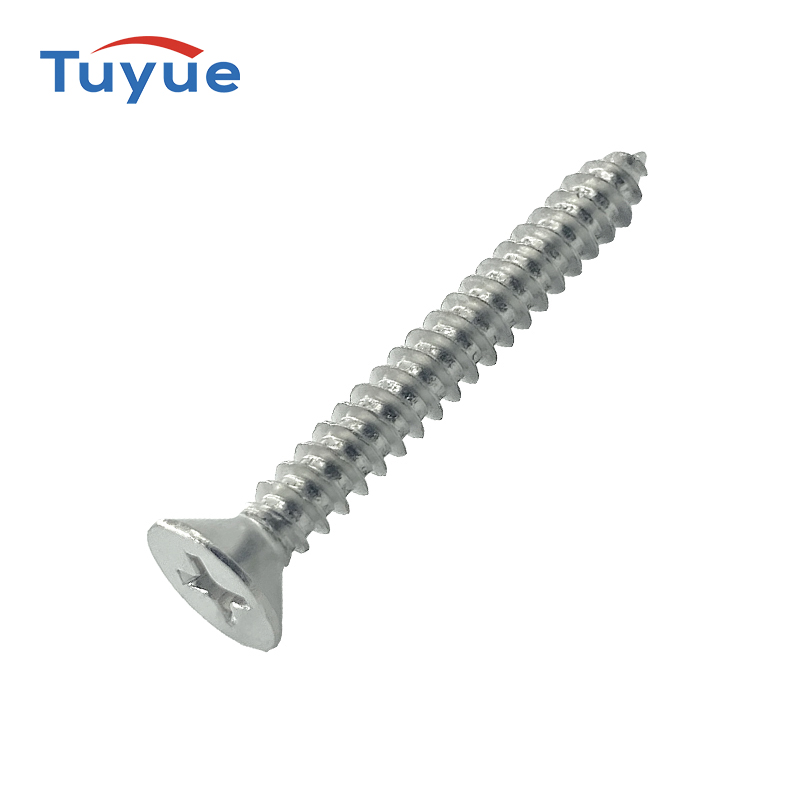
A Phillips drive drywall screw is a threaded fastener designed specifically for securing gypsum board panels to wood or light-gauge steel framing. The defining feature is its cross-shaped recess — the Phillips drive — which allows the screwdriver or power tool bit to seat firmly in the head and transfer rotational torque with minimal slippage. Compared to slotted-head designs, the Phillips geometry significantly reduces cam-out risk during high-speed driving, which is essential when working with a cordless drill or dedicated drywall gun.
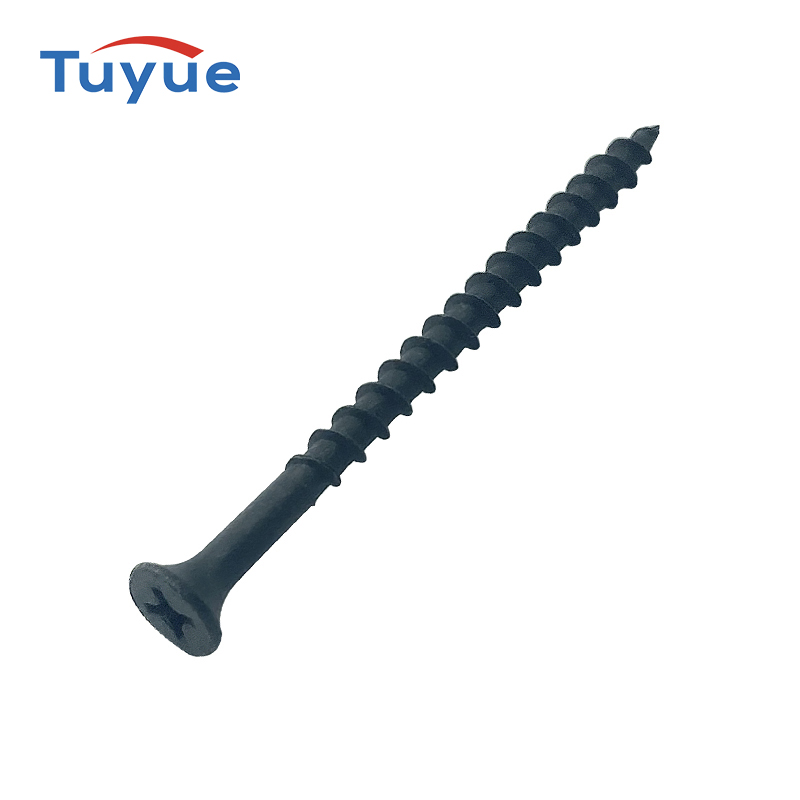
The screw covered here features a bugle (cross bulge) head profile, a coarse thread pitch, and a hardened carbon steel body with a black phosphate surface treatment. Each of these characteristics serves a specific engineering purpose, all of which are explained in depth below.
The bugle head — named for its concave, trumpet-like underside — is the standard head form for drywall fasteners. Unlike a flat countersunk head, the bugle profile allows the screw to embed itself just below the paper face of the drywall without tearing or breaking through it. The curved taper spreads the clamping load across a broader contact area, which distributes stress and prevents the screw from pulling through the relatively soft gypsum core.
This clean countersink action is what makes the bugle head indispensable in finishing work. After installation, only a shallow dimple remains on the board surface, which can be filled with joint compound in a single pass. Any head that punches through the paper face of the panel compromises the board's structural integrity and creates a point of moisture ingress — two outcomes that no professional installer can afford.
For projects where a completely flush or visually unobtrusive finish is required, this screw type is part of the broader Fasteners Screws category available from Tuyue, which includes complementary products such as Flat Head Tapping Screw DIN7982 and Flat Head Wood Construction Screws with Sharp Point and Slot Type 17 Cutting.
Thread pitch is one of the most consequential specification decisions when selecting a drywall screw. This product uses a coarse thread configuration, which is optimized for installation into wood framing — dimensional lumber, engineered wood joists, and plywood substrates.
Coarse threads have a larger pitch (fewer threads per unit length) and a deeper thread form. This geometry bites aggressively into wood fibers, generating high pull-out resistance with relatively low installation torque. The wide spacing between thread crests also prevents the threads from stripping soft or fibrous materials like pine or spruce framing, which are standard in residential construction.
Fine-thread drywall screws, by contrast, are designed for light-gauge steel studs. Their closer thread spacing and harder steel composition allow them to tap cleanly through thin metal without distorting it. Using a coarse-thread screw in metal studs risks cross-threading or pull-out failure, while using a fine-thread screw in wood produces inadequate holding force.
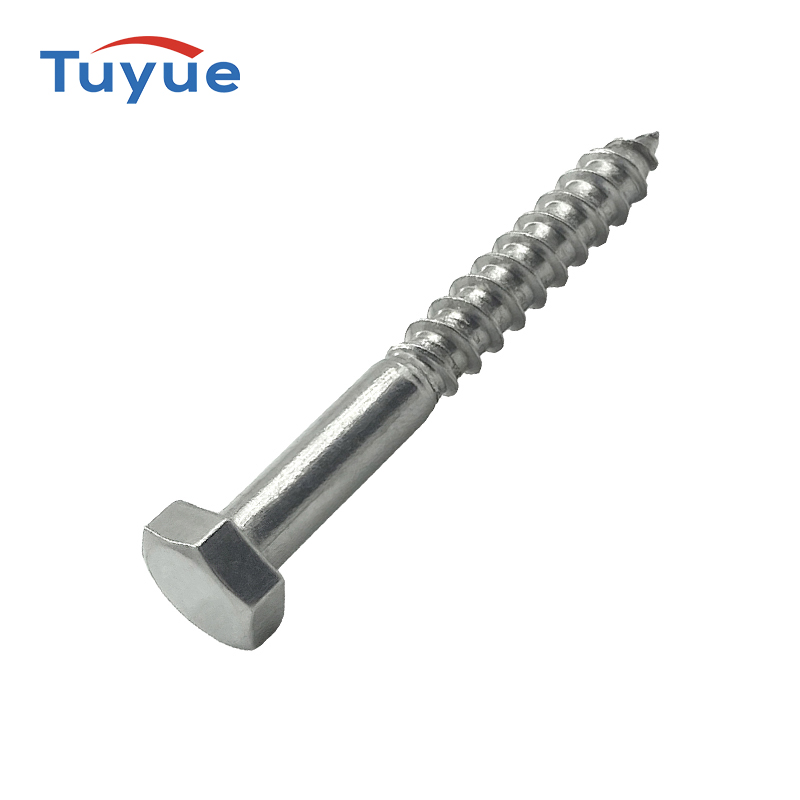
For builders who also work with structural timber and heavy wood applications, the DIN571 Hex Head Wood Screw available in the same product range provides complementary fastening capability in load-bearing timber connections.
The self-starting sharp point on this screw eliminates the need for a pilot hole in most standard drywall-to-wood installations. The needle-like tip acts as a punch, displacing material rather than cutting it, which means no pre-drilling step and significantly faster installation rates on the job site.
From a technical standpoint, the point geometry is designed to pierce the gypsum paper face and core cleanly, then transition smoothly into the wood substrate below. A poorly formed point creates too much resistance, which causes the drill to torque and can deflect the screw off-center. A point that is too aggressive, on the other hand, can cause the gypsum to crumble or chip at the entry point.
Maintaining consistent sharp-point geometry is a precision manufacturing requirement — one that reflects the production capabilities at the Tuyue factory, which has operated its own self-managed manufacturing plant since 2018 and now covers over 16,000 square meters of workshop space.
Black Phosphate Finish – Corrosion Resistance and Friction Reduction
The black phosphate coating applied to this screw serves two distinct functions: corrosion resistance and lubrication.
In chemical terms, phosphating is a conversion coating process in which the steel surface reacts with a phosphoric acid solution to form an adherent layer of iron phosphate or manganese phosphate crystals. This porous layer absorbs oil, which creates a surface that resists oxidation and reduces friction during driving. The result is a screw that threads into material smoothly and seats at the correct depth without excessive torque or heat buildup.
Black phosphate provides moderate corrosion protection — suitable for interior dry-wall applications in climate-controlled buildings. It is not intended for outdoor or high-humidity environments. For projects in corrosive environments such as coastal construction or industrial settings, a zinc-plated or stainless steel fastener from the Stainless Steel Bolt Nut Screws Washers category would be the appropriate upgrade.
The black finish also has a practical benefit during installation: it is less reflective than zinc or silver finishes, which makes the dimple easier to see and fill during the taping and finishing stage.
This product is manufactured in a full range of diameters and lengths to accommodate varying drywall thicknesses and substrate depths. Standard configurations include:
Single-layer 12.7 mm (1/2 inch) drywall panels are typically fastened with 32 mm (1-1/4 inch) or 38 mm (1-1/2 inch) screws. Double-layer installations or thick 15.9 mm (5/8 inch) fire-rated boards require longer screws in the 51 mm (2 inch) to 64 mm (2-1/2 inch) range to achieve sufficient embedment into the framing below.
The standard diameter for drywall screws is No. 6 (approximately 3.5 mm), which is optimized for the torque-to-cross-section ratio of a bugle-head Phillips configuration. Coarser No. 8 diameter versions are available for applications requiring higher pull-out values, such as ceiling installation or heavy acoustic board.
All dimensions are available on request. Tuyue's production and export team can provide custom packaging, bulk quantities, and tailored sizing to meet project-specific demands. Contact details are available on the Contact page.
Proper installation of a Phillips drive drywall screw requires attention to three variables: driving speed, depth setting, and spacing.
Driving speed should be controlled to prevent over-driving. Most professional drywall guns include an adjustable nose cone that physically stops the screw at the correct depth — just below the paper face without breaking through it. If using a standard cordless drill, a depth-sensitive clutch or a Phillips bit with a stop collar achieves the same result.
Screw spacing follows standard building codes. For walls, screws are typically placed at 305 mm (12 inch) intervals on edges and 406 mm (16 inch) intervals in the field. For ceilings, closer spacing of 203 mm (8 inches) on edges and 305 mm (12 inches) in the field is required to counteract the effects of gravity and vibration.
Each screw should be driven perpendicular to the board surface. Angled screws create uneven stress concentration and can cause local paper tearing, which weakens the panel's structural bond to the framing.
The primary application for this product is the attachment of standard gypsum drywall panels to wood stud framing in interior partition walls and ceilings. However, the same screw type is also appropriate for a range of related uses, including attaching cement board underlayment to wood subfloors (where moisture resistance of the substrate, not the screw, governs specification), securing plywood sheathing to light wood framing, and fastening acoustic ceiling tiles or backing boards in commercial interior fit-outs.
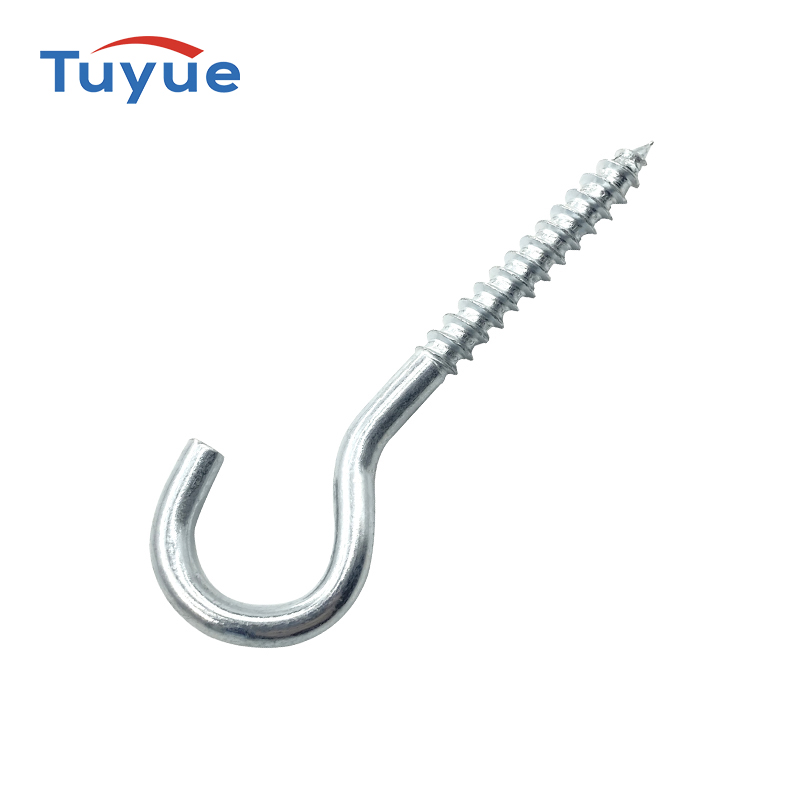
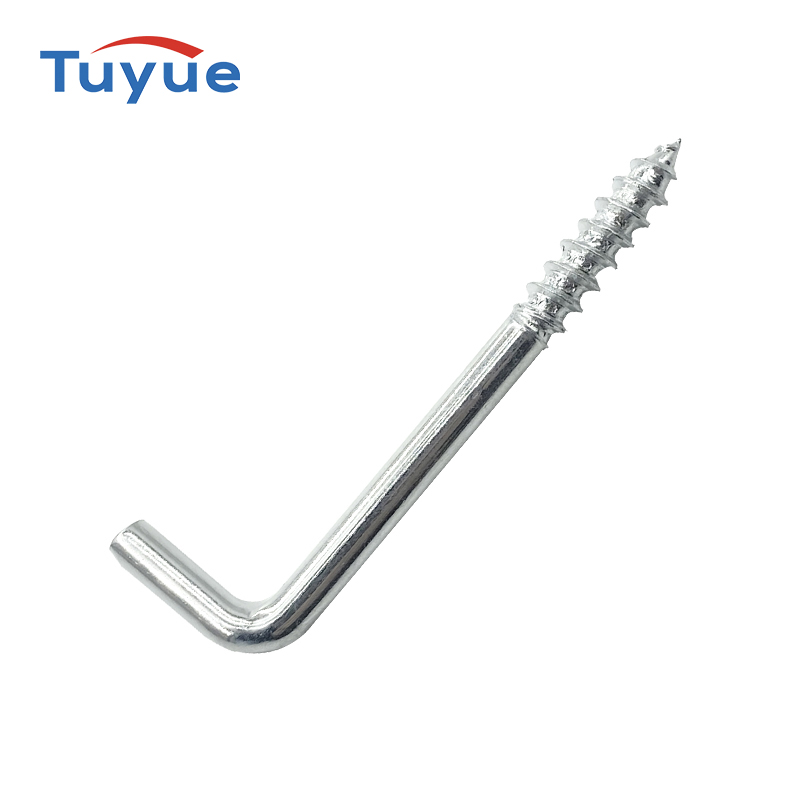
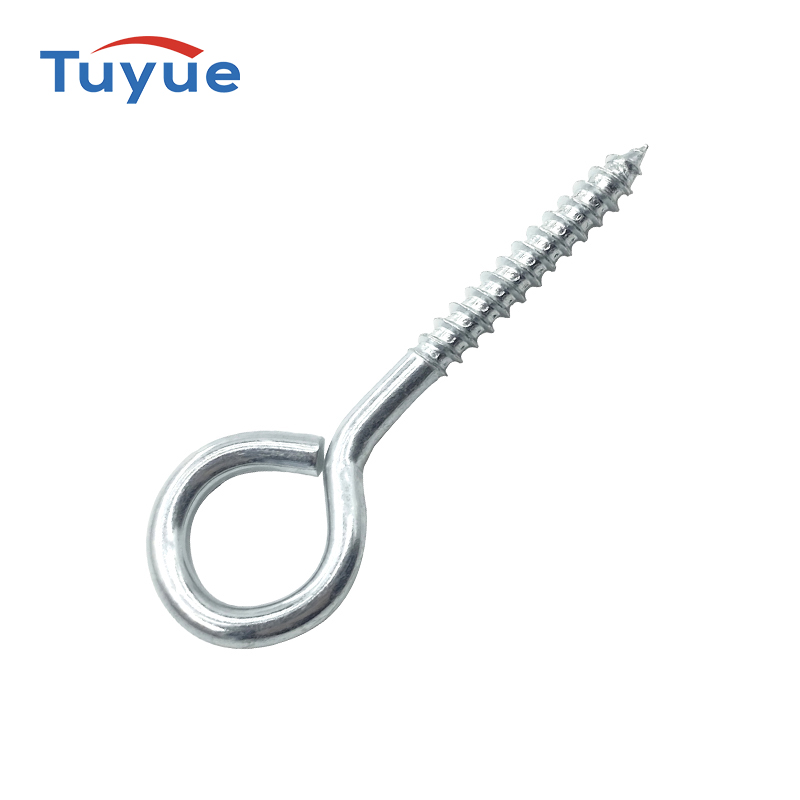
For fastening applications that extend beyond drywall — such as hanging fixtures, suspending cables, or attaching hardware to finished walls — the Eye Screws C Type, Eye Screws L Type, and Eye Screws O Type available from the same product family offer purpose-built solutions for load-bearing suspension in wood substrates.
For structural timber connections in wood framing, decking, and joinery applications, the Construction Wood Screw and Hex Flange Head Wood Screw with Cut Type 17 complete the range for contractors who source all fastener types from a single supplier.
Zhejiang Jiaxing Tuyue Import and Export Co., Ltd. has been engaged in the manufacturing and export of drilling screws and hardware fasteners since 2006, originally established in Ningbo Cixi. The company relocated its headquarters to Jiaxing in 2014, a city positioned at the geographic midpoint between Shanghai and Hangzhou, offering direct access to port, rail, and air freight infrastructure across the Yangtze River Delta Economic Zone.
The company's self-operated manufacturing facility has been in operation since 2018 and was upgraded to an intelligent production environment in 2025. Output value at the factory exceeded USD 40 million in 2024. With over 200 clients served globally and more than 800 shipping containers dispatched annually, the scale of production supports consistent batch quality across large procurement volumes.
Quality control procedures encompass every stage of production — from raw material selection and order confirmation through in-line inspection, final inspection, and pre-shipment sampling. Production videos and photos are shared with clients on request prior to loading. This level of process transparency is aligned with the company's mission, as stated on the About Us page: to deliver value to clients through precision craftsmanship and responsible manufacturing.
Certifications held by the factory include ISO9001 and IATF16949 for the bearing manufacturing division, with the hardware fastener division operating under equivalent process controls appropriate to the construction fastener market.
Tuyue's complete Hardware and Fasteners range covers roofing screws, self-drilling screws, solar and photovoltaic mounting hardware, aluminium and steel blind rivets, stamping parts, stainless steel bolts, nuts, and washers — making the company a genuine one-stop fastener supplier for importers, distributors, and contractors who need to consolidate their procurement.
For customers with questions about order minimums, custom specifications, packaging requirements, or technical compliance with regional building codes, the FAQ page provides answers to common procurement questions, and the sales team is reachable at office@zjraise.cn or export@zjraise.cn.