Okay, picture this: you've got some MDF or chipboard to put together, maybe for a cabinet box, a workbench top, or some built-in shelves. You don’t want some flimsy little screw—you need something that can take some real force and won’t rust on you overnight. That’s where this guy comes in.
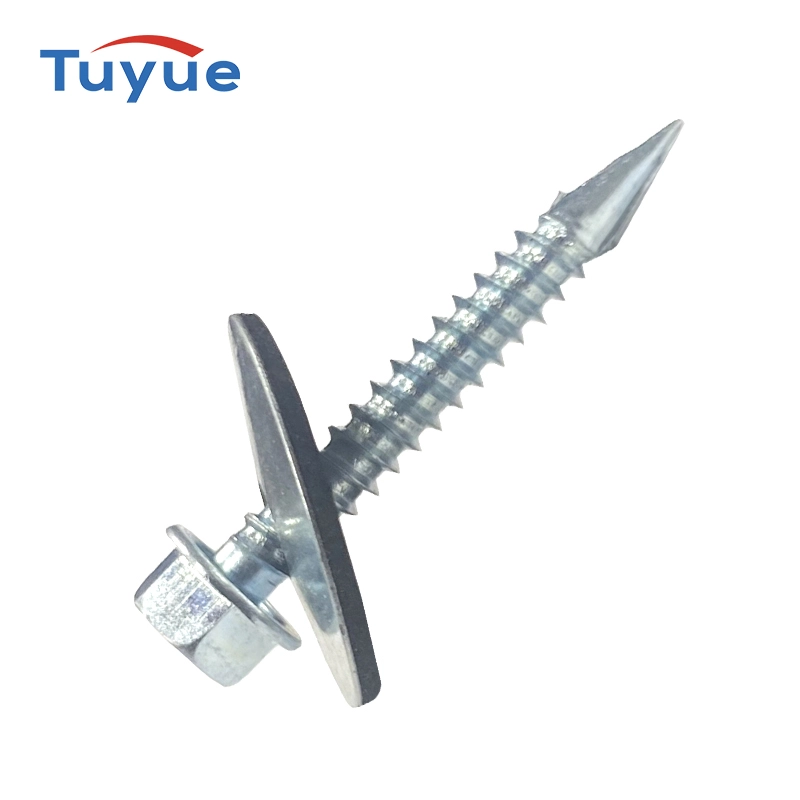
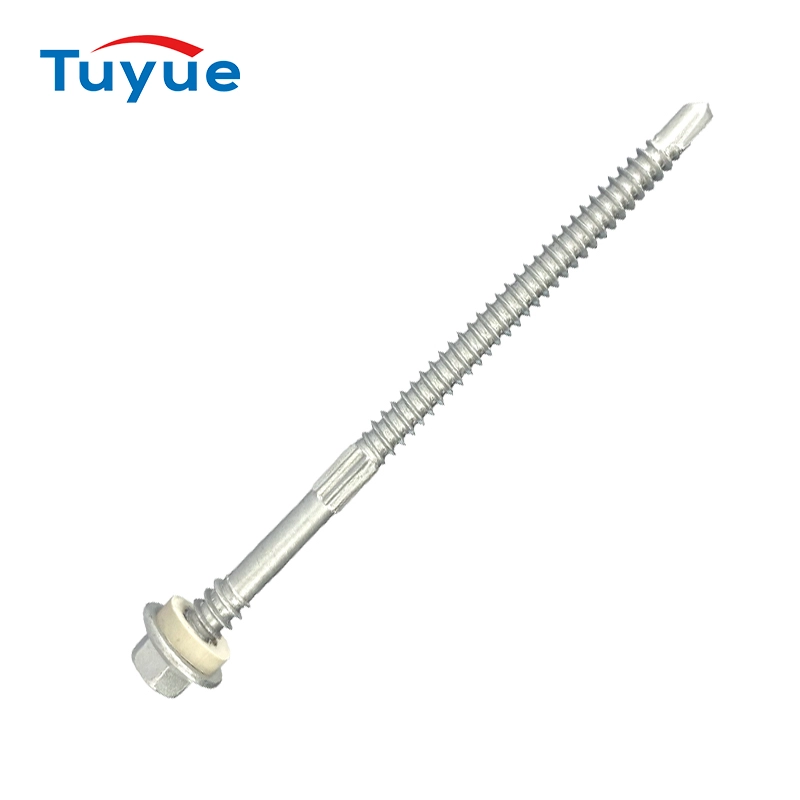
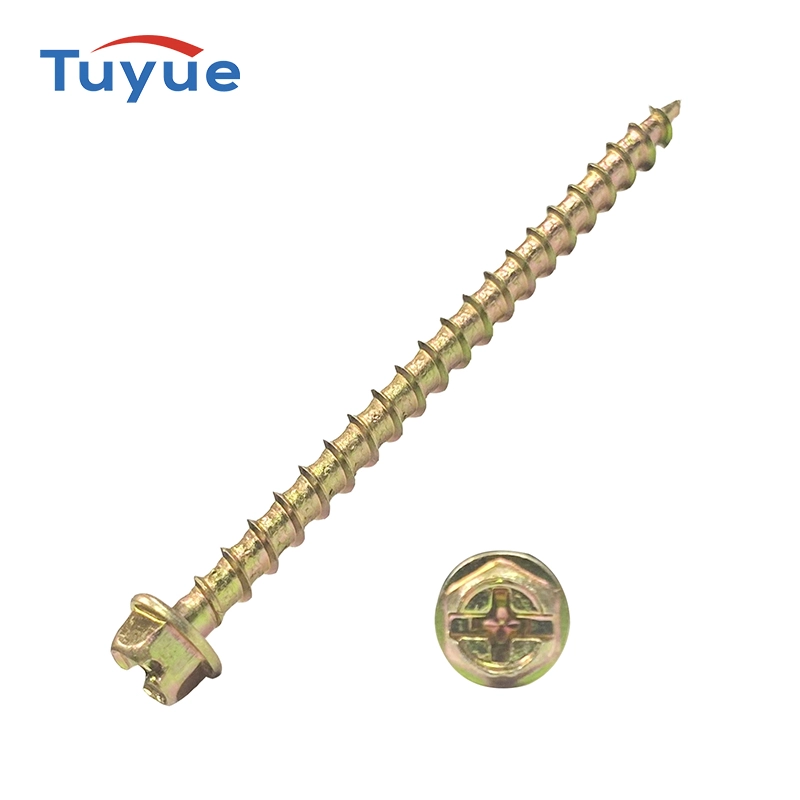
That Big Hex Head with the Washer Attached is why you’d pick it. The six flat sides mean you can grab it with a wrench or a socket and really crank down on it without the tool slipping and ruining the head. And that washer that’s part of it? It’s like giving the screw a bigger hand—it spreads the squeeze over more area so it doesn’t just pull right through the crumbly edge of your particle board.
The Slot Down the Middle is a nice backup. It means if you’re just doing a quick fix or your impact driver isn’t handy, you can still turn it with a regular old flathead screwdriver.
The Shiny Yellow Coating—that’s what fights the rust. It’s not just paint; it’s a layer of zinc put on there in a special way that gives it that gold-ish color. It’s good for stuff that’s staying inside your house or shop. (I wouldn’t use it for a mailbox post or a planter box that’s in the rain all day, though—it’s tough, but not that kind of tough.)
You’ll find yourself reaching for this screw when you’re:
Putting together flat-pack furniture, kitchen cabinet frames, or garage storage made from that compressed board.
Building a wooden frame, a shed base, or anything where two pieces of wood need to stay locked together tight.
Basically, any time you’re joining wood (or a wood-like board) to something else and you need a strong, no-fuss connection that also looks halfway decent and won’t rust from indoor humidity.
Making these isn’t magic; it’s just a couple of smart steps. First, they make the metal part tough, and then they give it its protective shell.
Making the Raw Screw: They start with a thick steel wire. A machine smashes one end of it to form that big hex head—a process called cold forging. Then, another part of the machine rolls the shaft between two grooved plates. This squeezes and forms the metal into those sharp, deep threads that are perfect for grabbing wood fibers. Doing it this way actually makes the metal stronger than if they just cut the threads away.
Putting on the Yellow Coat (The Plating): This is where it gets its color and protection. Think of it like a little assembly line spa treatment:
First, they toss all the screws in to get a serious wash—they’re cleaned and rinsed to get off any grease or dirt.
Then, they take an electric bath. They’re dunked in a tank with a zinc solution, and electricity is run through it. This sticks a super-thin, even layer of zinc onto every bit of the steel.
Finally, the key step for the color: the passivation dip. This is a quick chemical bath that transforms the surface of the fresh zinc into that yellowish, protective film. This film is what really locks out moisture and keeps rust from starting. (A lot of places now use newer, safer chemicals for this step that don’t have chromium.)
Yep, It’s Standard Practice: Go on any big industrial marketplace website—you know the ones. You’ll see listings with “Free Sample” or “Sample Available” right there in the title. They expect you to ask.
Here’s How It Normally Works: You find a seller that looks good and send them a message. They’ll get back to you, ask what your project is, and for your address to calculate shipping. Now, here’s the typical deal: the screws themselves won’t cost you a dime, but you’ll almost always have to pay the shipping fee to get them sent to you. Think of it as paying for the delivery, not the product.
The Easiest Way to Do It: Just be direct. Write something like: “Hey there, I’m interested in your hex washer head slotted screws with the yellow zinc finish. Could I get a few free samples sent over? I’m happy to cover the shipping costs.” Send that to a couple of different suppliers and see who gives you the best reply.