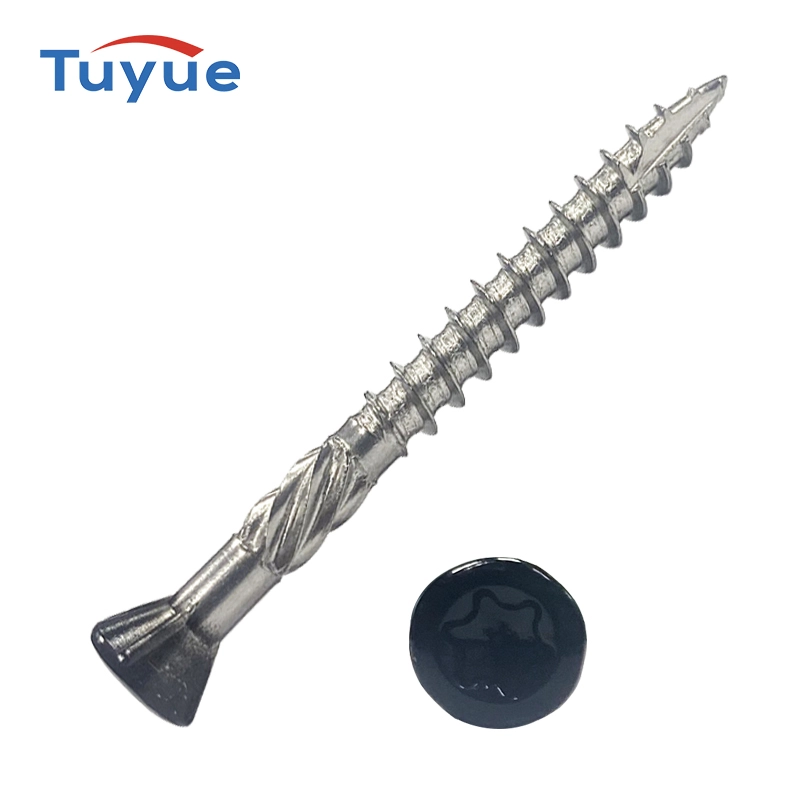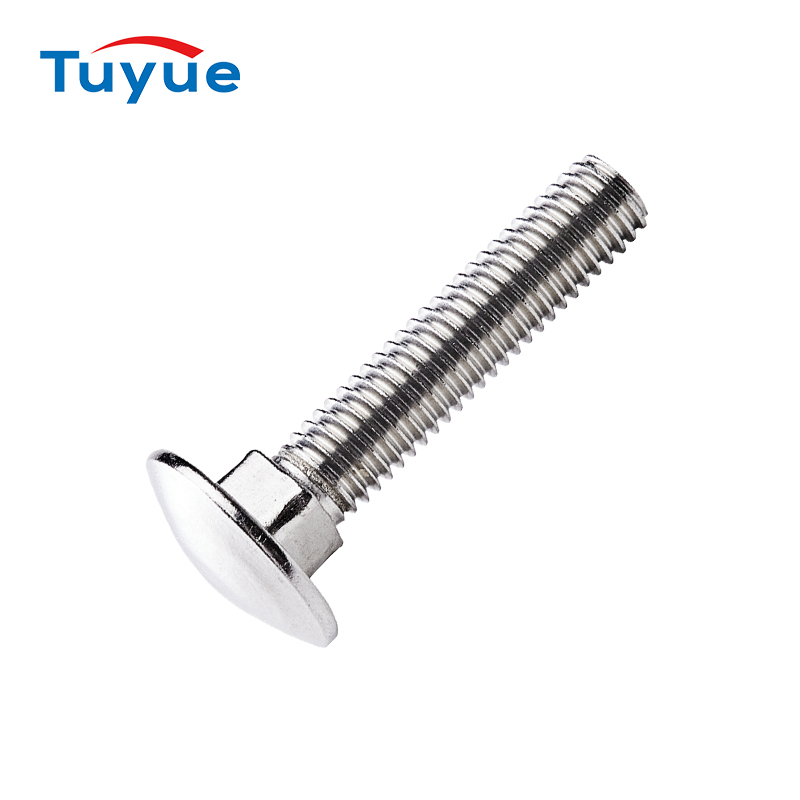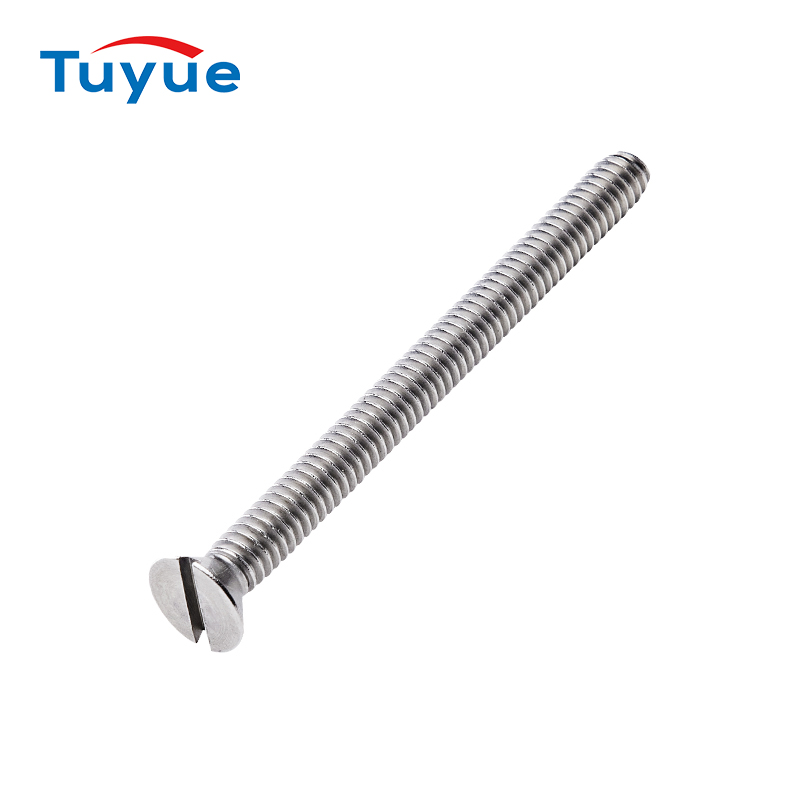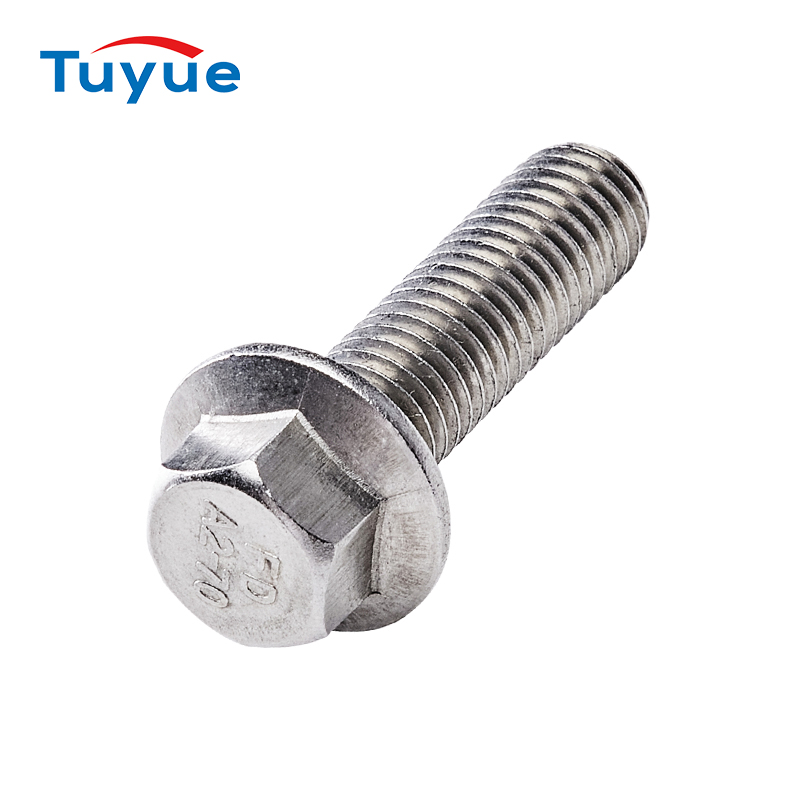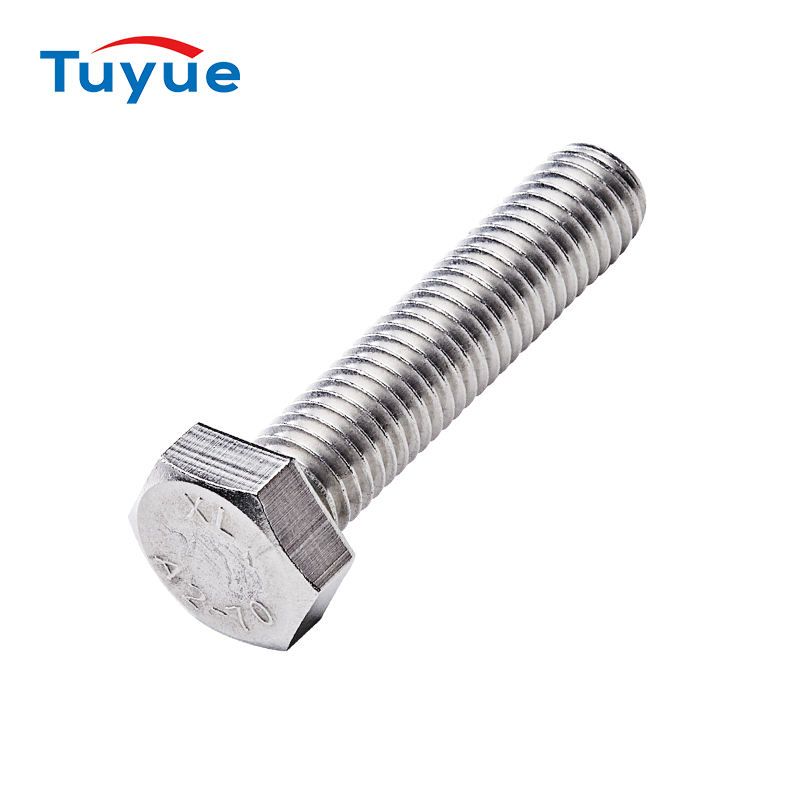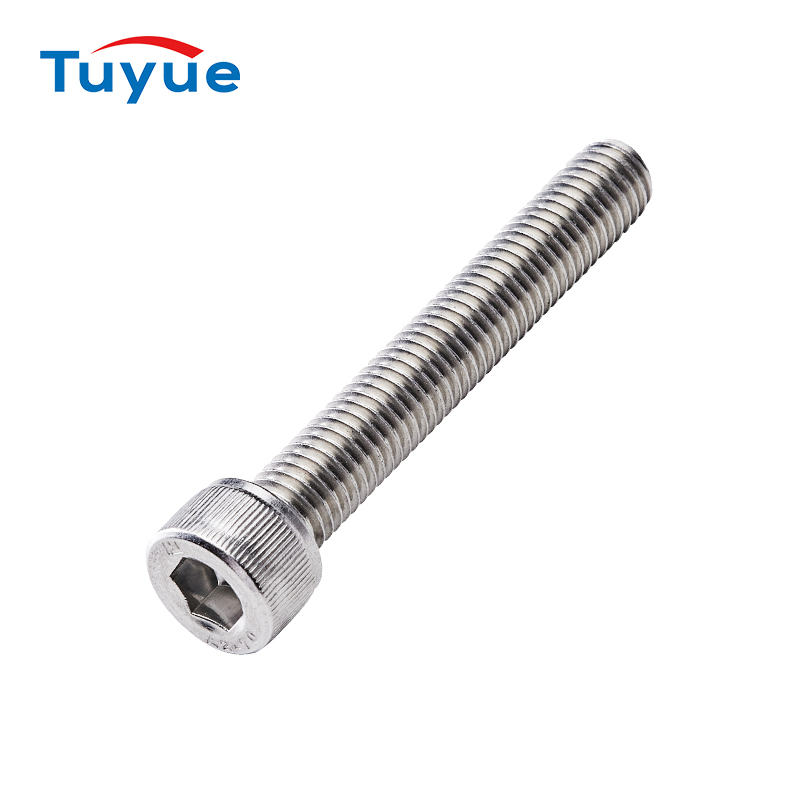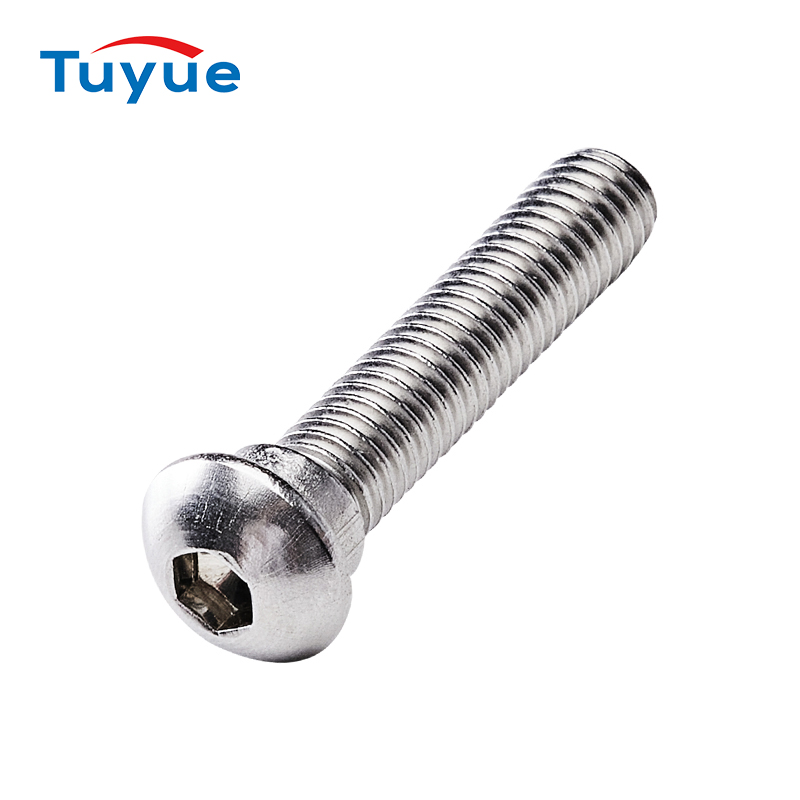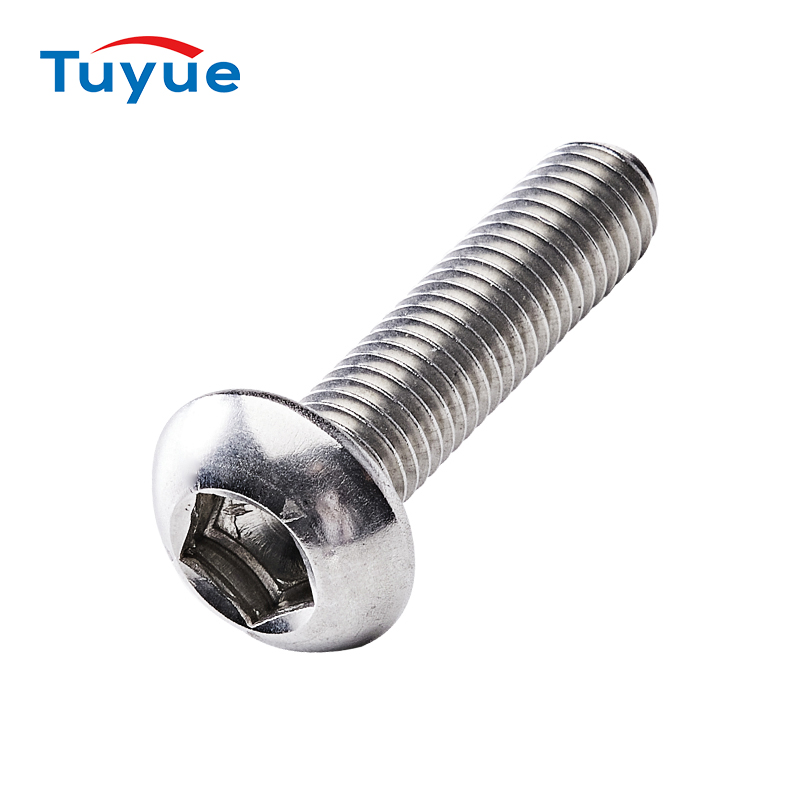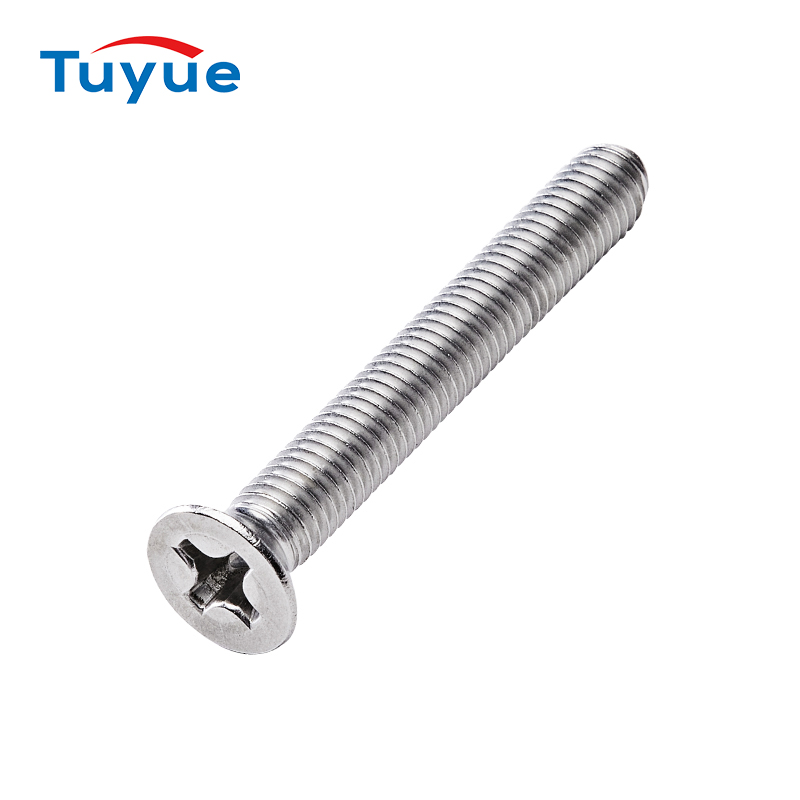
The DIN 965 flat head bolt, formally defined as a cross-recessed countersunk flat head screw with metric thread, is a machine screw designed to sit flush with or below the surface of the mating material once fully fastened. The defining characteristic is its 90° countersunk head angle combined with a Phillips (Type H) or Pozidriv (Type Z) cross recess, enabling torque transmission through a standard cross-head driver.
Standardized under the German Institute for Standardization (Deutsches Institut für Normung), DIN 965 has been widely adopted across European and global manufacturing as a benchmark for flush-mount fastening. It is closely related to ISO 7046-1 (Phillips recess) and ISO 7046-2 (Pozidriv recess), and engineers often treat the two specifications as interchangeable within tolerance bands. In practice, DIN 965 remains the more commonly cited designation in industrial procurement worldwide.
As a trusted hardware and fasteners supplier, Zhejiang Jiaxing Tuyue Import and Export Co., Ltd. manufactures and exports DIN 965 bolts to clients across more than 50 countries, maintaining full dimensional and mechanical compliance with the standard.
DIN 965 bolts are produced in metric coarse thread series. Standard nominal diameter coverage runs from M2 through M10, with M3, M4, M5, M6, and M8 being the most commercially active sizes. Thread pitch follows ISO 68-1 coarse pitch defaults: M3 × 0.5, M4 × 0.7, M5 × 0.8, M6 × 1.0, M8 × 1.25, M10 × 1.5. Fine-pitch variants exist but are produced to customer specification rather than as a catalogued standard item.
The countersunk head angle is 90° ± 1°, measured between opposing flanks of the cone. The head diameter (dk) and head height (k) follow a fixed proportional relationship per nominal diameter. For reference: M4 yields dk ≈ 8.0 mm and k ≈ 2.2 mm; M6 yields dk ≈ 12.0 mm and k ≈ 3.3 mm; M8 yields dk ≈ 16.0 mm and k ≈ 4.4 mm. These values apply to the preferred tolerance class (medium). The slightly domed or flat top surface variant is specified by the purchaser at order placement.
DIN 965 H designates Phillips (Type H) recess per ISO 4757.
DIN 965 Z designates Pozidriv (Type Z) recess per ISO 4757.
The recess depth and form directly affect cam-out resistance. Pozidriv offers measurably improved torque transmission and is preferred in automated assembly lines and applications requiring repeated fastening cycles.
Fully threaded shanks are standard for lengths up to approximately 30 mm; partially threaded shanks appear in longer lengths per DIN 965 annex guidance. Nominal lengths (l) range from 3 mm to 80 mm depending on diameter. Length is measured from the underside of the head cone to the tip of the bolt.
Thread tolerances conform to ISO 965-1, tolerance class 6g for the external thread. Straightness and surface finish are inspected per the requirements outlined in the DIN 965 dimensional standard and cross-referenced with ISO 4759-1 (tolerances for fasteners).
Low-carbon steel (equivalent to AISI 1010–1018 or Chinese GB Q235/Q345 grades) is the base material for standard-grade DIN 965 bolts. Cold heading followed by thread rolling produces consistent grain flow and reliable mechanical properties.
Property class 4.8 is the most common classification for plain carbon steel DIN 965 bolts. Property class 8.8 is achievable with medium-carbon steel and appropriate heat treatment, covering applications requiring higher tensile strength.
Austenitic grades A2 (AISI 304) and A4 (AISI 316) dominate the corrosion-resistant segment. A2 provides adequate resistance in indoor or mildly humid environments; A4 is specified for marine, chemical processing, or outdoor structural applications where chloride exposure is a concern.
Our stainless steel bolt nut screws washers range includes DIN 965 in A2-70 and A4-70 property classes, meaning minimum tensile strength of 700 MPa.
Brass DIN 965 bolts serve electrical and decorative applications where conductivity or aesthetic finish is critical. Aluminium variants offer weight reduction for aerospace-adjacent or consumer electronics assemblies.
The choice of surface treatment affects corrosion resistance, dimensional envelope, friction coefficient, and regulatory compliance (particularly regarding RoHS and REACH). The following are the principal options:
Zinc Electroplating (Clear / Yellow / Black Passivation): The most widely specified coating for carbon steel DIN 965 bolts. Coating thickness typically ranges from 5–12 µm. Yellow chromate passivation provides additional sacrificial protection. Black passivation is used for visual differentiation and moderate corrosion resistance.
Hot-Dip Galvanizing: Produces a thicker zinc layer (45–85 µm), suitable for heavy outdoor exposure. Thread tolerance must be adjusted prior to galvanizing because the coating adds significant material to the thread form.
Dacromet (Geomet): A water-based zinc-aluminium coating offering six times the salt spray resistance of standard electroplating with no hydrogen embrittlement risk. Preferred in automotive sub-assemblies.
Nickel Plating: Applied for decorative or mild corrosion-resistant finishes, common in consumer electronics and furniture hardware.
Phosphate + Oil (Parkerizing): A conversion coating that improves oil retention, used as a pre-assembly lubricant carrier and corrosion inhibitor for indoor applications.
Plain (Self-Colour): Supplied without surface treatment for applications where the engineer specifies their own coating process post-machining or in non-corrosive indoor environments.
Property class defines the mechanical performance of a bolt independently of its material family.
Class 4.8 (Carbon Steel): Tensile strength ≥ 420 MPa, yield strength ≥ 340 MPa, elongation ≥ 14%.
Class 8.8 (Medium-Carbon Steel, Quenched & Tempered): Tensile strength ≥ 800 MPa, yield strength ≥ 640 MPa.
Class A2-70 (Stainless 304): Tensile strength ≥ 700 MPa, 0.2% proof load stress ≥ 450 MPa.
Class A4-70 (Stainless 316): Same mechanical thresholds as A2-70 with enhanced pitting corrosion resistance.
Hardness values for carbon steel grades are specified in ISO 898-1; for stainless steel grades in ISO 3506-1. Tuyue's quality control team verifies hardness on production lots per these referenced standards.
DIN 965 is the primary standard, with the following cross-references commonly encountered in engineering documentation:
ISO 7046-1: Countersunk flat head screws with type H cross recess — product grade A.
ISO 7046-2: Countersunk flat head screws with type Z cross recess — product grade A.
ISO 15065: Countersunk flat head screws with hexalobular recess (not DIN 965, but frequently confused in procurement).
ASME B18.6.3: North American equivalent for machine screws with flat head, using unified inch threads (functionally similar but dimensionally different).
JIS B 1111: Japanese Industrial Standard equivalent, with near-identical geometry.
When international procurement documents reference DIN 965, ISO 7046, or equivalent cross-references simultaneously, Tuyue's technical team verifies which dimensional series takes precedence and aligns production accordingly.
Wire rod is drawn to precise diameter, fed into a cold heading machine, and struck under high tonnage to form the countersunk head profile in a single or progressive die stroke. Cold heading work-hardens the material, enhancing tensile and fatigue performance compared to machined equivalents.
Rolled threads — produced by displacing material between hardened dies rather than cutting it — yield superior root radius profile, compressive residual stresses, and fatigue resistance compared to cut threads. All standard DIN 965 production at Tuyue uses thread rolling.
Property class 8.8 and above requires quench and temper treatment. Carbon content, quenching medium (oil or water), tempering temperature, and duration are controlled within tight process windows and verified by in-house hardness testing.
Electroplating lines, Dacromet application equipment, and phosphating tanks are operated under process sheets referencing applicable ASTM, ISO, and internal QC specifications. Salt spray testing per ISO 9227 (ASTM B117) is conducted on sampled lots.
Tuyue's quality management system is certified to ISO 9001. Each production lot of DIN 965 bolts undergoes the following inspection sequence:
Incoming wire rod: chemical composition certificate review and hardness spot check.
In-process: dimensional inspection of head geometry, recess depth, shank diameter, and thread form using calibrated gauging and optical comparators.
Finished goods: visual inspection, thread gauge pass/fail (Go/No-Go per ISO 1502), tensile test sampling, and torque recess engagement test per ISO 4757.
Coating: thickness measurement (Fischer XRF or magnetic induction per ISO 2178/ISO 2360), adhesion, and salt spray hours per batch certificate.
Full material test reports (MTR), dimensional reports, and surface treatment certificates are available on request for each shipped order. Browse our product range to see our complete quality commitment across all fastener families.
The receiving material must be pre-drilled and countersunk to the correct angle (90°) and diameter. An undersized countersink forces the screw head above the surface; an oversized countersink causes the head to sink below and reduces clamping efficiency. Countersink cutters with 90° included angle are widely available from standard tooling suppliers. Recommended countersink diameter equals dk of the selected screw size per the DIN 965 dimensional table.
Use the correct Phillips or Pozidriv driver size corresponding to the recess number stamped or specified on the screw. Mismatch between driver and recess size is the primary cause of cam-out damage and recess stripping. For M3–M4: PH1 / PZ1. For M5–M6: PH2 / PZ2. For M8–M10: PH3 / PZ3.
Recommended installation torques for DIN 965 property class 4.8 (lubricated condition, friction coefficient µ = 0.12): M4: 2.5 N·m; M5: 5.0 N·m; M6: 8.5 N·m; M8: 20.0 N·m. For stainless steel A2-70, apply the same torque envelope but use anti-seize lubricant (molybdenum disulphide or copper-based) to prevent galling during installation.
Standard DIN 965 bolts do not incorporate locking features. Where vibration resistance is required, specify thread-locking adhesive (e.g., Loctite 243 medium-strength), nylon patch pre-applied to thread, or pair with a lock washer. For high-vibration assemblies, consult Tuyue's engineering team for fastener selection guidance.
Flush mounting is the defining functional requirement driving DIN 965 selection across a wide range of industries:
Electronics & Consumer Devices: Circuit board mounting, enclosure panels, handheld device assembly — wherever a protruding head would obstruct adjacent components or aesthetics.
Automotive Interior & Trim: Dashboard assemblies, door panels, and seat rail covers require flush fasteners to meet surface quality and occupant safety requirements.
Furniture & Cabinetry: Flat-pack furniture, drawer slides, and hinge plates use DIN 965 where a smooth surface finish is required.
Sheet Metal Fabrication: Electrical enclosures, switchgear panels, HVAC ductwork frames, and control cabinets rely on countersunk screws to maintain smooth internal surfaces.
Solar & Photovoltaic Mounting Structures: Flush fastening in aluminium frame assemblies prevents sharp protrusions that could damage wiring insulation. Our dedicated solar and photovoltaic module fastener range complements DIN 965 in complete PV mounting solutions.
General Machine Assembly: Covers, guards, brackets, and access panels across food processing, packaging, and industrial machinery.
Construction & Structural Steelwork: Used with stamping parts and steel framing; see our stamping part iron framing steel corner product series for complementary components.
DIN 965 vs. DIN 963 (Slotted Countersunk): DIN 963 uses a single straight slot recess. DIN 965 uses cross recess (Phillips or Pozidriv). Cross recess enables higher torque transmission and is preferred for power tool assembly.
DIN 965 vs. DIN 7991 (Hexalobular / Torx Countersunk): DIN 7991 uses a six-lobe internal drive, offering higher torque transfer and longer driver life in automated assembly. DIN 965 remains preferred where standard Phillips or Pozidriv tools are the infrastructure standard.
DIN 965 vs. DIN 966 (Raised Countersunk / Oval Head): DIN 966 has a slightly domed head profile for decorative applications. DIN 965 provides a fully flush or sub-flush result when properly countersunk.
DIN 965 bolts are supplied in the following standard formats: bulk carton (inner PE bag + outer carton), plastic tray (for automated assembly line feeding), and vacuum-sealed reel tape (for pick-and-place compatible sizes under M4). Custom packaging per customer specification — including labelling, lot traceability barcodes, and mixed-size kits — is available for OEM customers.
Minimum order quantities vary by size, material, and coating. Standard carbon steel items typically carry lower MOQ thresholds; custom stainless grades or special coatings require higher minimum volumes to support production setup. Contact the Tuyue team directly via our contact page for a current price list and MOQ schedule.