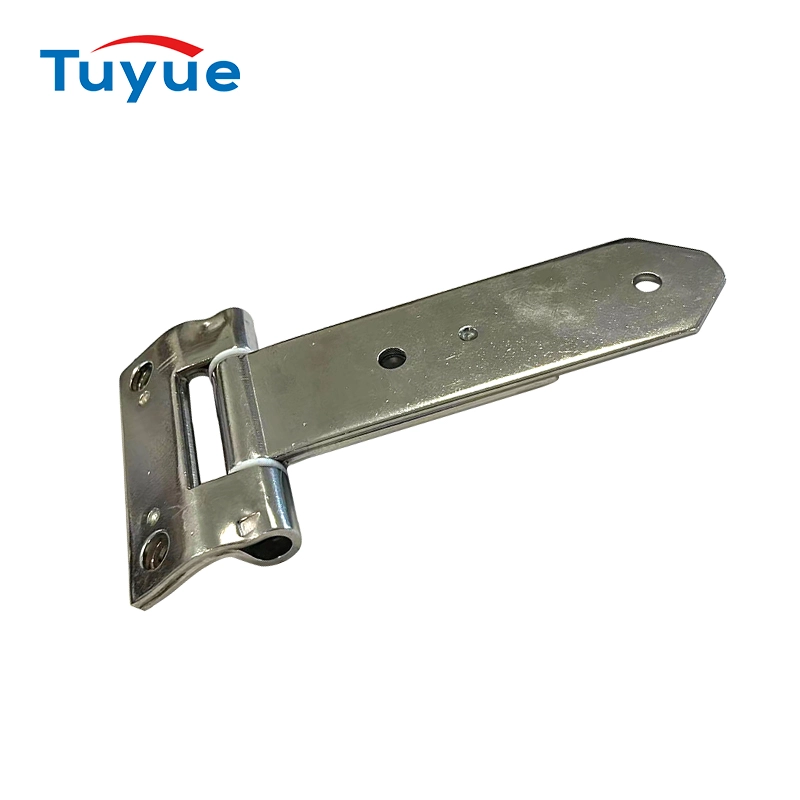
They show up in more places than you'd think. Take enclosed cargo trailers—strap hinges are pretty much the standard there. They're tough, built to last, and can easily handle heavy doors that get swung open and shut all day long, no matter if it's pouring rain or burning sun. Most of the time, they're made from solid steel so they don't quit on you out on the road.
For cabinet doors, it's a whole different story. People pick strap hinges here mostly for the style—that rustic, industrial, kinda vintage look. You'll see them on farmhouse-style furniture, workshop cabinets, maybe even something with a steampunk twist. They bring personality to the piece while still doing their job.
And when you move into industrial settings—like big warehouse doors or heavy entry gates—these hinges really prove their worth. They're built to carry serious weight without sagging or failing down the road. Some of the newer ones are actually designed to be a little leaner but still just as strong.
There's some pretty clever engineering behind it. A lot of strap hinges are made using something called roller-bending. Here's how it works: you start with a flat sheet of metal—usually high-strength steel—and feed it through a series of rollers. Those rollers slowly bend the metal into that long, curved strap shape. It's delicate work, and manufacturers run all kinds of simulations beforehand to make sure the metal bends perfectly and doesn't try to spring back into its flat shape.
Depending on the hinge style, some need welding, especially around the part that holds the pin in place. That weld has to be rock solid—it's literally what keeps everything from falling apart. After that, they drill the mounting holes. And honestly, the smarter hinge designs nowadays use fewer screws but hold just as tight, which makes putting them on way faster.
Throughout the whole process, they're constantly checking for quality. One thing they really pay attention to is how the hinge wraps around the pin—needs to be loose enough to swing smoothly, but tight enough that your door doesn't hang crooked. Once that's dialed in, they add a protective coat or finish to stop rust and keep it looking good for years.
Most suppliers in this business are totally cool with sending out free samples. It's pretty standard practice, actually. They get it—you want to see the quality firsthand, feel the weight, check the fit before you commit to a big order. So if you're interested, just hit up the supplier directly and ask. They'll usually take care of shipping and get one out to you without much hassle.
Hope that gives you a better handle on things. If you're trying to figure out what material or weight rating makes sense for what you're doing, just let me know—happy to help you sort through it.