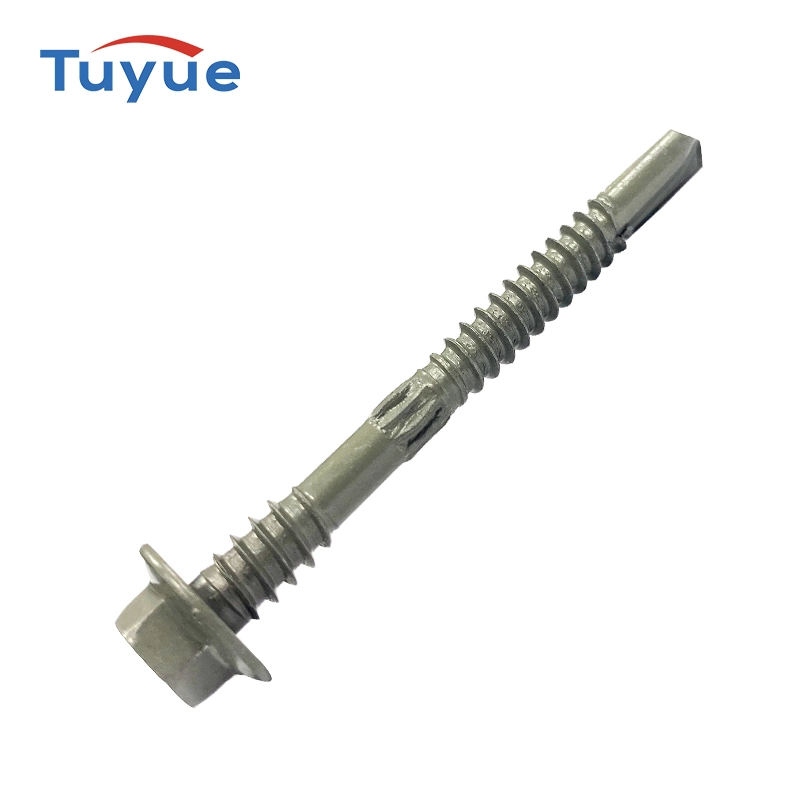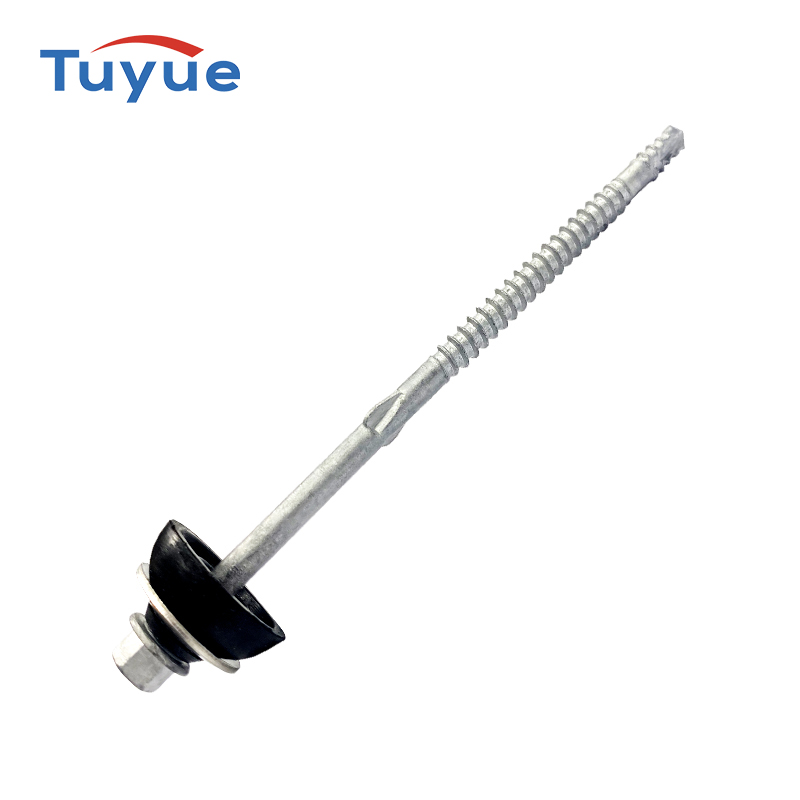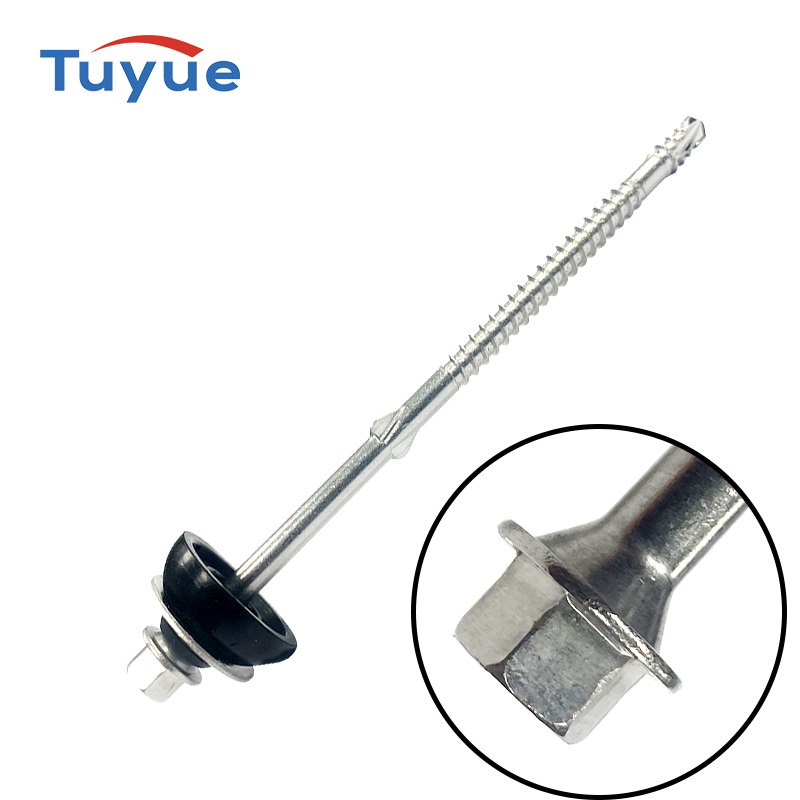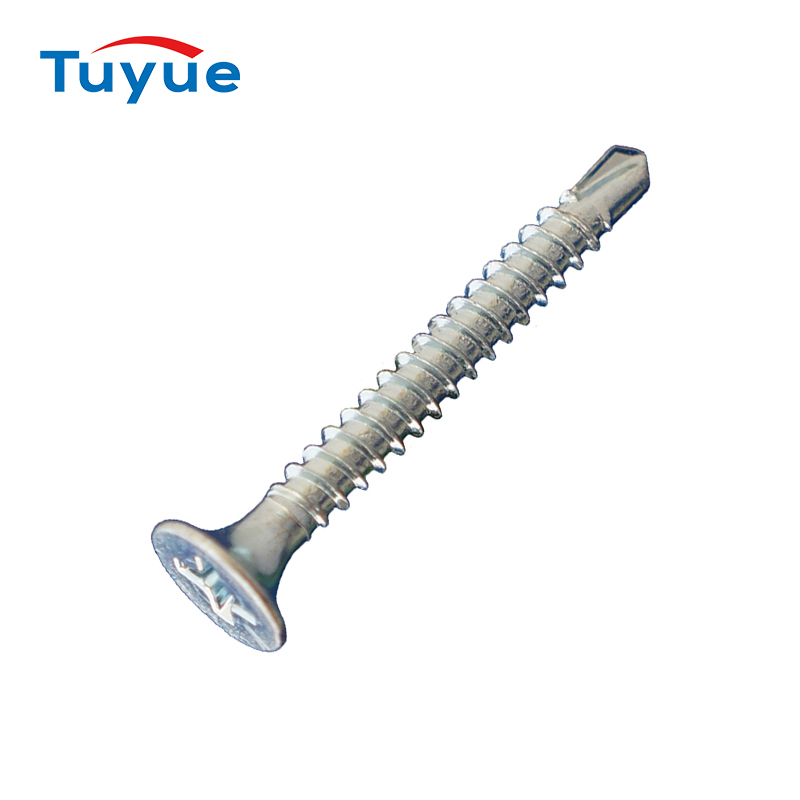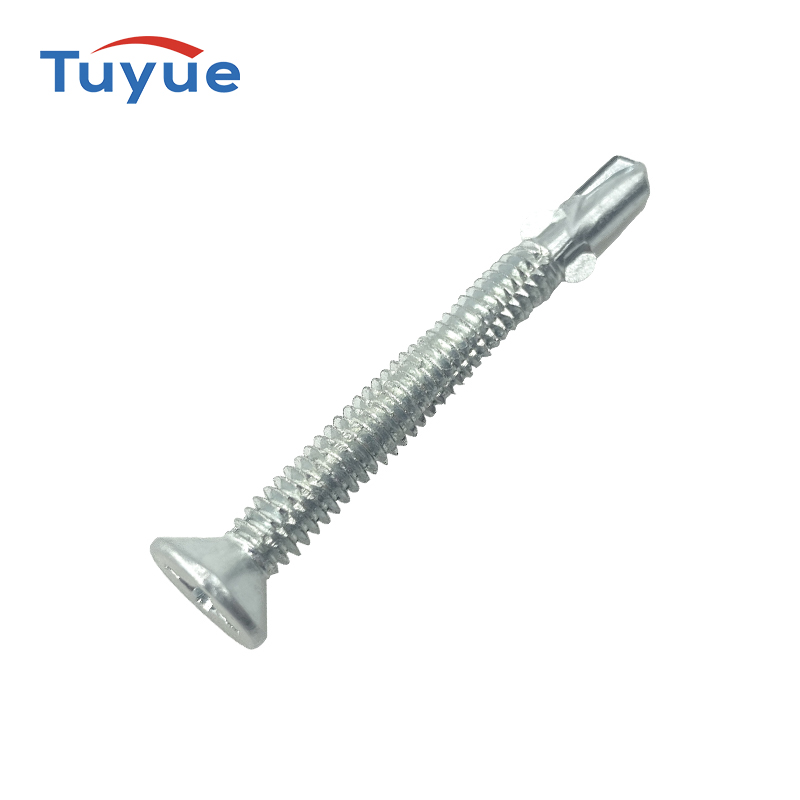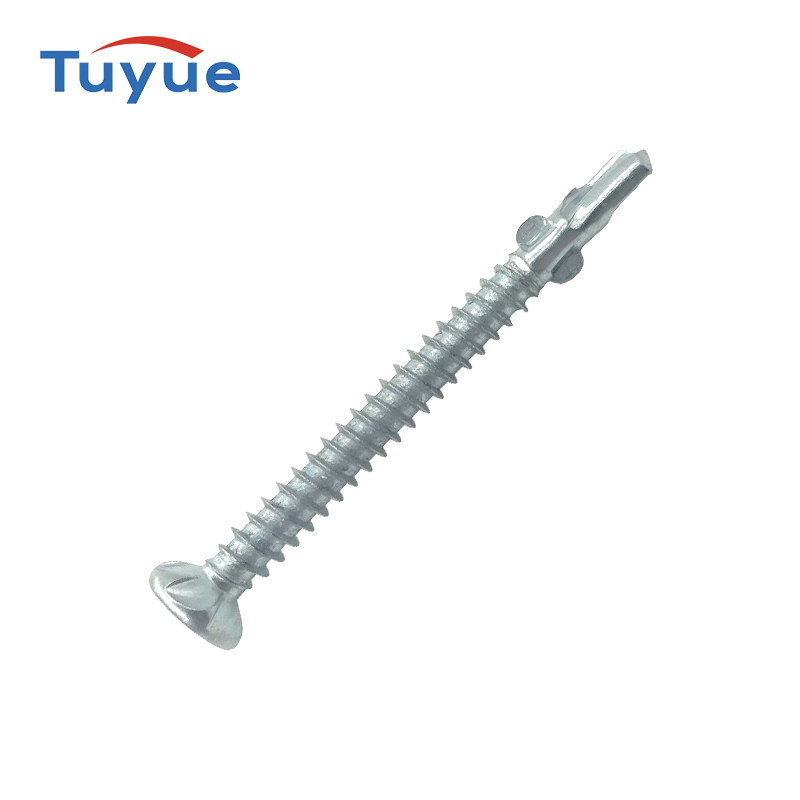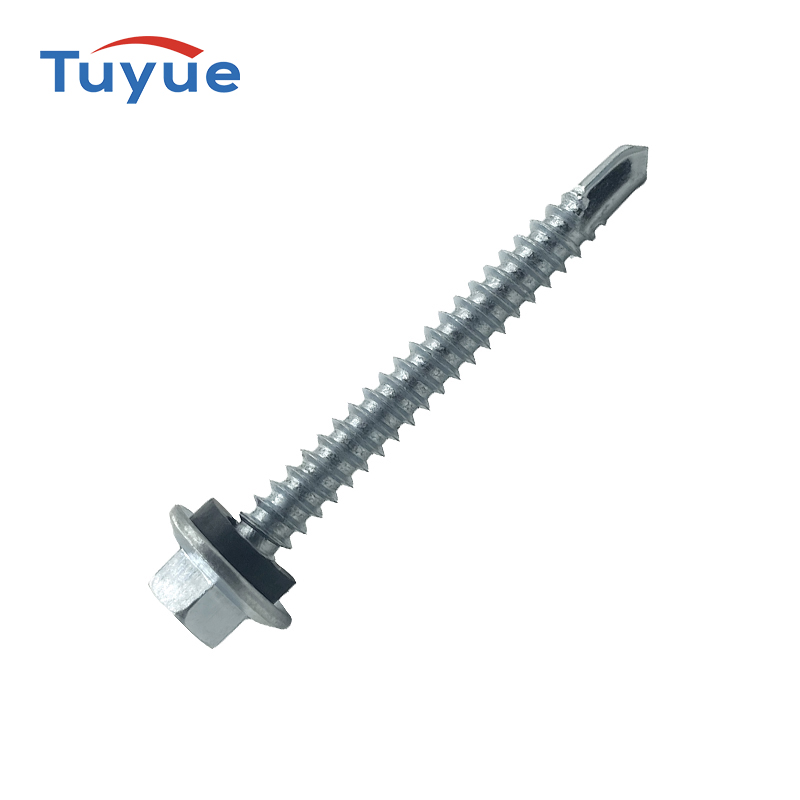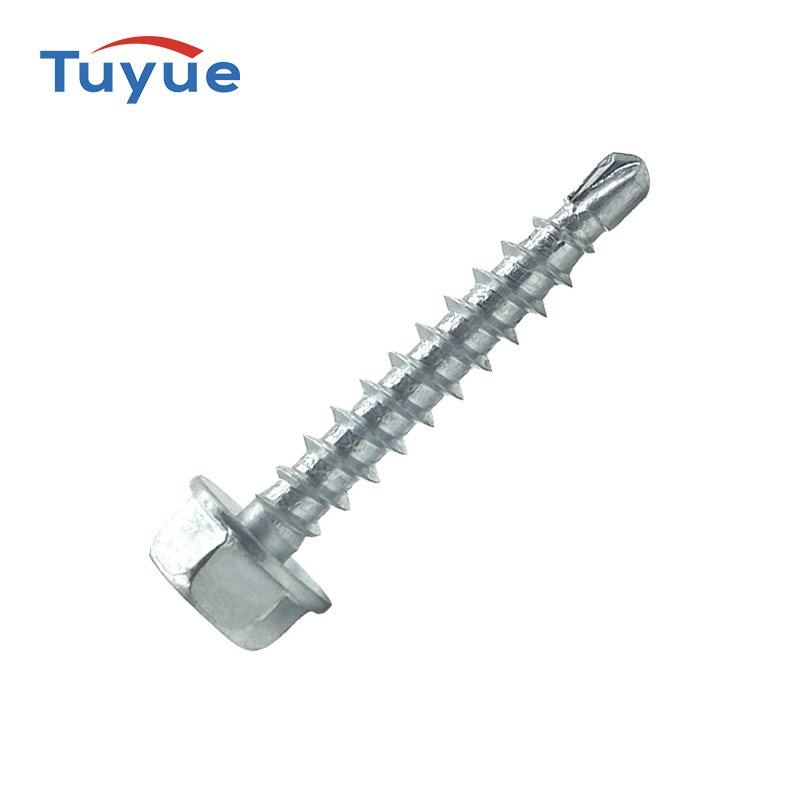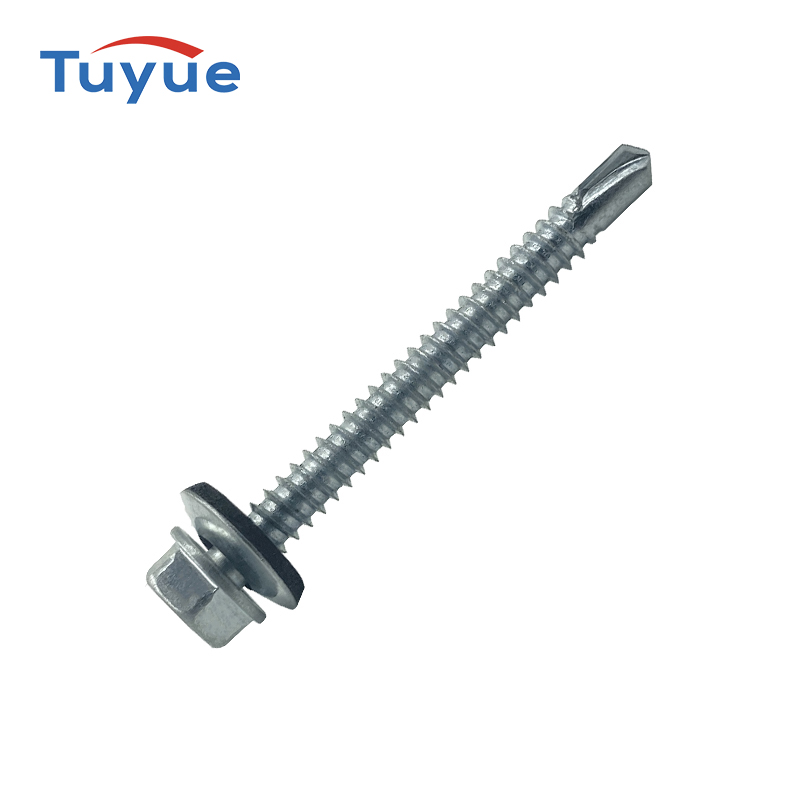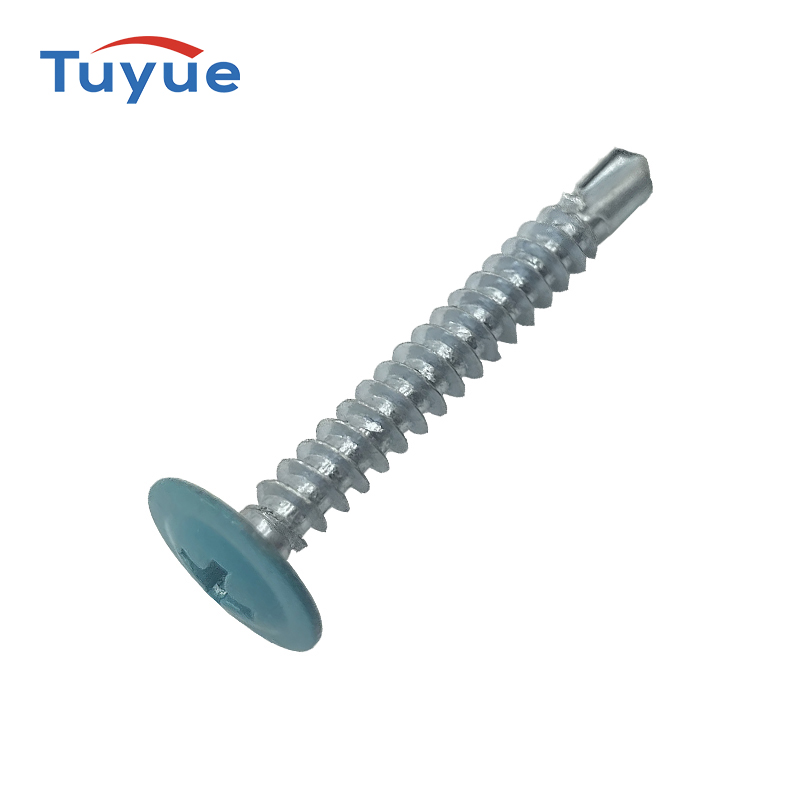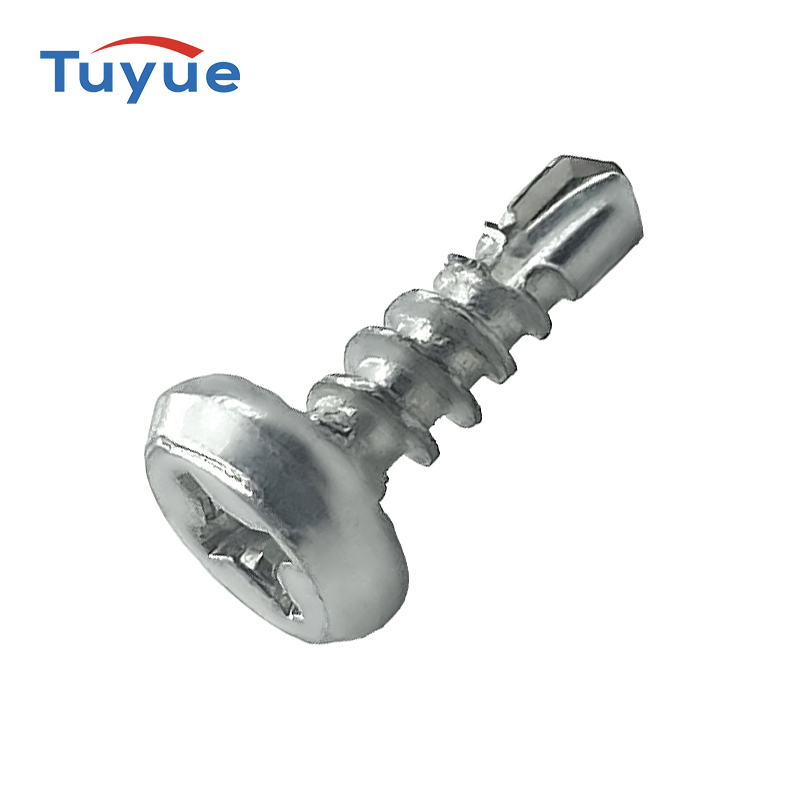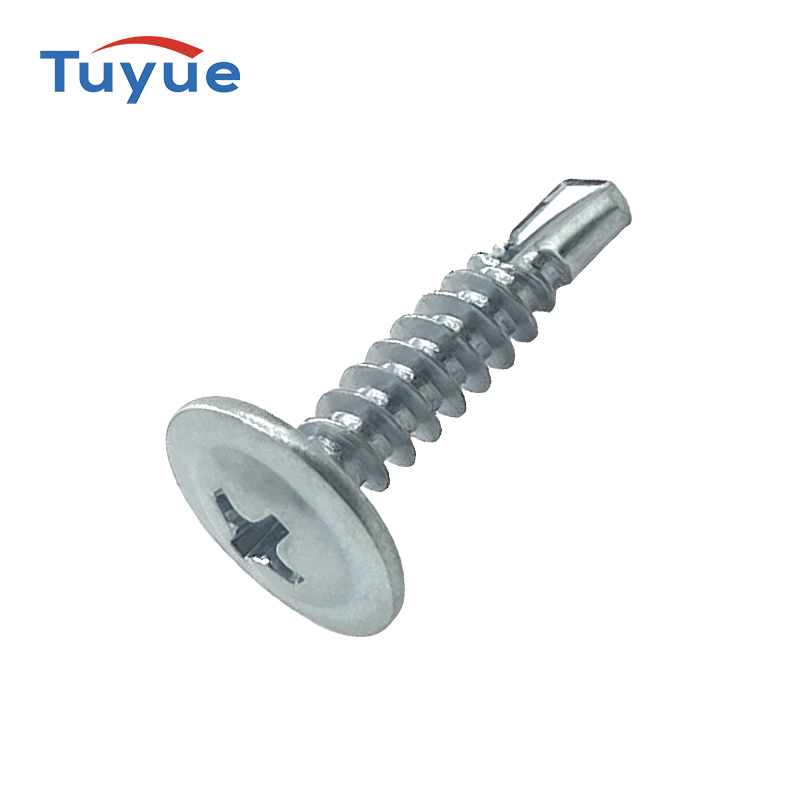
A button head self-drilling screw is a specialized fastener that combines a low-profile, dome-shaped head with an integrated drill-point tip. Unlike conventional screws that require pre-drilled pilot holes, the self-drilling tip penetrates metal substrates in a single operation — drilling, tapping, and fastening simultaneously. This design is widely adopted in metal roofing, cladding panels, curtain walls, and light steel framing where speed, aesthetics, and structural integrity are equally critical.
Zhejiang Jiaxing Tuyue Import And Export Co., Ltd. (global-tuyue.com) manufactures and exports these fasteners as part of its full range of Hardware and Fasteners, serving construction and industrial clients worldwide from its facility in Jiaxing, Zhejiang, China.
The "button head" profile — also referred to as a low-profile dome head — features a wider bearing surface than a standard pan head, yet a lower crown than a truss head. This geometry achieves three technical objectives simultaneously:
First, load distribution. The broad underside area spreads clamping force over a larger contact zone, reducing stress concentration on thin sheet metal or roofing panel skins. This is especially important in 0.4–0.8 mm steel cladding where localized over-compression can initiate fatigue cracks.
Second, reduced protrusion height. The low crown minimizes snagging risk in overhead or wall applications and delivers a cleaner visual finish on exposed architectural surfaces.
Third, driver recess compatibility. Button head self-drilling screws are typically driven by a Phillips (PH2) or a Pozidriv recess. The shallow dome limits recess depth, so torque settings on power tools must be carefully calibrated — generally 4–8 N·m for M4–M6 sizes — to avoid cam-out or head stripping.
Compare this geometry with the Modified Truss Head Self-Drilling Screw and the Pan Framing Self-Drilling Screw available from Tuyue, which serve different load-distribution and structural-framing scenarios.
The drill point on a self-drilling screw is classified by its rated drilling capacity. The industry uses a numbered system — most commonly Point 2 through Point 5 — where higher numbers indicate longer flute length and greater steel penetration capacity:
Point 2 (approx. 9.5 mm flute): Suitable for drilling through sheet metal up to 1.5 mm total thickness. Typical use in light gauge roofing panels and cladding skins.
Point 3 (approx. 12.7 mm flute): Handles total substrate thickness up to 3.0 mm. Appropriate for mid-gauge purlins and secondary steel.
Point 4 / Point 5 (flute 16–19 mm): Designed for heavy structural steel, enabling penetration through combined substrates — for example, a roofing panel over a 4–6 mm steel purlin — without pre-drilling.
The button head variant is most frequently paired with Point 2 and Point 3 tips, given that its primary application zone is thin-skin panel-to-purlin or panel-to-panel assembly rather than heavy structural steel. For heavier substrate work, the Hex Head Self-Drilling Screw with EPDM Washer or Hex Flange Self-Drilling Screw with Spoon Point offer higher torque-transfer efficiency and larger drill-point options.
Reference standard: DIN 7504-K (button head self-drilling screw with cross recess) and ISO 15480 govern dimensional requirements for self-drilling screws across European and international markets.
Tuyue's button head self-drilling screws feature a dual-layer surface system that is technically significant:
Layer 1 — Electro-Galvanization or Hot-Dip Galvanization: Zinc deposition provides cathodic protection. Electro-galvanized coatings typically deliver 5–12 µm zinc thickness and achieve 96–120 hours of salt spray resistance (per ISO 9227 / ASTM B117). Hot-dip variants reach 45–85 µm zinc, extending salt spray performance to 500+ hours — suited for coastal and high-humidity environments.
Layer 2 — Phosphate Conversion Coating: Applied over the zinc layer, the phosphate micro-crystalline structure serves dual purposes. It acts as a secondary corrosion barrier by filling micro-pores in the zinc layer, and it provides a textured surface that improves lubricant adhesion. This reduces driving torque by 15–25% compared to bare zinc, lowering the risk of head cam-out during installation.
Together, these two layers outperform single-treatment options in cyclic corrosion testing and are cost-effective for large-volume roofing projects. For applications demanding higher corrosion immunity — such as marine-grade environments — stainless steel fasteners from the Stainless Steel Bolt Nut Screws Washers category or bi-metal variants like the Ruspert Hex Flange Head Bi-Metal Self-Drilling Screw should be specified instead.
Self-drilling screw threads differ from standard machine screw threads in two key ways: thread pitch and form. Button head self-drilling screws typically use a coarse, asymmetric thread profile with a sharper leading flank angle. This geometry cuts rather than displaces the substrate material during installation, producing a cleaner internal thread and greater pull-out resistance per unit of thread engagement.
In thin steel applications, pull-out strength is governed by the bearing area of the thread flanks against the tapped hole walls. For a typical M4.8 × 19 mm button head screw installed in 1.0 mm steel, pull-out values in the range of 1.8–2.5 kN are achievable, depending on base metal tensile strength (commonly S350GD+ per EN 10346 for galvanized steel sheet). Engineers specifying fasteners for wind-uplift-critical roofing systems should obtain certified test data — ISO 6892-1 tensile testing methodology applies to fastener qualification.
The Cross Recessed Bugle Head Drilling Screw and Flat Head Drilling Screw variants offer complementary thread geometries for wood decking and composite substrate applications.
Button head self-drilling screws are the preferred fastener in the following construction scenarios:
Metal roofing and wall cladding panel attachment: The low-profile head sits flush or nearly flush against the panel skin, avoiding interference with seam caps or overlapping panels. This is the primary application supported by Tuyue's product range under Roofing Screws and Drilling Screws.
Sheet metal fabrication and HVAC ductwork: Where visual cleanliness of fastener heads is required on internal exposed surfaces.
Solar panel mounting accessories: An adjacent application area — Tuyue's Solar and Photovoltaic Module fastener category covers related hardware for PV frame assembly.
Light gauge steel framing (LGSF): Secondary framing connections where the button head profile avoids interference with gypsum board or sheathing layers.
Selection parameters engineers must confirm before specifying: nominal diameter and thread pitch (e.g., 4.2 × 13, 4.8 × 19, 5.5 × 25 mm are common), drill point number matched to total substrate stack thickness, coating class matched to corrosion exposure category (per ISO 9223 C1–C5 classification), and drive recess type compatible with site tool inventory.
Correct installation of button head self-drilling screws requires attention to several technical details that are frequently overlooked on site:
RPM control: The optimal drilling speed for carbon steel substrates is 1,500–2,500 RPM for Point 2–3 tips. Excessive speed generates frictional heat that can anneal the hardened drill point, causing premature tip failure before full thread engagement is achieved.
Perpendicularity: The screw must enter the substrate at 90° ± 3°. Angular deviation degrades drill-point efficiency and produces an oval entry hole, reducing thread engagement and pull-out capacity.
Over-driving: Button head screws lack a washer, so over-driving crushes the head into the panel skin. Torque-limiting power tools set to 5–7 N·m are recommended for M4–M5 sizes to achieve correct head-seating without deforming the panel.
Galvanic compatibility: When fastening aluminum panels to steel purlins, the zinc-coated steel screw sits between two dissimilar metals. The galvanic series positions zinc close to aluminum, making this combination acceptable. Avoid using bare steel screws in aluminum/steel assemblies without a protective coating.
For more technical support, Tuyue's FAQ page provides additional guidance, and direct technical inquiry is available via office@zjraise.cn or +86-573-82646333.
Zhejiang Jiaxing Tuyue Import And Export Co., Ltd. is a one-stop fastener supplier based in Jiaxing, Zhejiang — a region historically recognized as a manufacturing hub for precision hardware. The company's product portfolio spans the full Hardware and Fasteners spectrum including blind rivets, stamping parts, and specialty fasteners, enabling consolidated sourcing for complex construction projects.
The company holds relevant certifications, maintains production consistency through in-house quality control, and services export markets globally. Buyers seeking volume OEM supply, custom dimensional specifications, or alternative coatings can reach the export team directly at export@zjraise.cn.